Thursday, November 09, 2023

Check out preparedness events at APHA’s Annual Meeting

The American Public Health Association’s 2023 Annual Meeting and Expo is right around the corner! With all the excitement of the different events, there are so many options to choose from. If you’re attending the meeting in Atlanta, you’ll want to check out information briefings, scientific speakers, exciting keynote speakers and lots of other activities.

The Get Ready team made a list of preparedness events for each day that relate to preparedness and infectious disease prevention! If you’re attending, check out some of these sessions:

Sunday: 

1- 2 p.m., Sunday, Nov. 12, session 2014: “COVID-19: An On-Going Pandemic,” a poster session hosted by APHA’s Student Assembly

2:30 – 4 p.m., Sunday, Nov. 12, session 2061: “Children’s Environmental Health,” an oral session 

4:30 – 6 p.m., Sunday, Nov. 12, session 2167: “Disabilities, Disasters and Emergency Preparedness: A Collaborative Oral Session,” a collaborative session with the Injury Control and Emergency Health Services and Disability Sections 

Monday:

8:30 – 10 a.m., Monday, Nov. 13, session 3021: “Integrating Measurement, Mapping and Community Narratives to Assess and Alleviate Environmental Health Stresses,” an oral session Endorsed by APHA’s One Health and Community Health Planning and Policy Development Sections. 

10:30 – 11:30 a.m., Monday, Nov. 13, session 3068: “Climate Change & Health Poster Session,” a poster session hosted by APHA’s Environment Section

2:30 – 3:30 p.m., Monday, Nov. 13, session 3194: “Environments & Aging in Place” a poster session hosted by APHA’s Aging and Public Health Section

6:30 – 9p.m., Monday, Nov. 13, session 369: “Environment Section Social Hour,” a social hour hosted by APHA’s Environment Section

Tuesday: 

8:30 – 10 a.m., Tuesday, Nov. 14, session 4026: “Emerging Topics in Environmental Health,” an oral session hosted by APHA’s Environment Section

10:30 – 11:30 a.m., Tuesday, Nov. 14, session 4081.1: “Disaster Response Late Breakers Poster Session,” a poster session hosted by APHA’s Injury Control and Emergency Services Section

4:30 – 6 p.m., Tuesday, Nov. 14, session 4273.2: “From Combating Climate Denialism to Fighting False Solutions: The Continuing Absence of Health and Justice in Climate Policies and the Urgent Need for Change,” an oral session hosted by APHA’s Center for Climate, Health and Equity 

4:30 – 6 p.m., Tuesday, Nov. 14, session 4294: “Climate Change, Disasters and Environmental Health,” an oral session hosted by APHA’s Environment Section

Wednesday:

10:30 a.m. – 12 p.m., Wednesday, Nov. 15, session 5064: “Reimagining the Role of Health Departments and Their Partners in Responding to Climate Change: The Building Resilience and Climate Equity Framework,” an oral session hosted by APHA’s Center for Climate, Health and Equity 

12:30 – 2 p.m., Wednesday, Nov. 15, session 5136: “Climate Change and Health,” an oral session hosted by APHA’s Environment Section

All of this year’s Annual Meeting events are listed in the online program for registered attendees.

If you’re at the Annual Meeting stop by the Get Ready booth, located in APHA Central in the Expo Hall! Our team will have fact sheets for your individual preparedness to different emergencies as well free flashlights to complete your emergency stockpile! Stop on by and Get Ready with us!


Thursday, November 02, 2023

Set your clocks and check your stocks: tips for emergency stockpiles!


Daylight saving time is coming to an end. That means it’s time to change your clocks and check your emergency stockpile! Pushing your clock back one hour is a great reminder to check in on your emergency supplies. This will help make sure all your tools are ready to be used in case of an emergency. Get Ready has a checklist and helpful tips to follow when making your emergency stockpile.

 The basics that should always be in your emergency supply are: 
1. Three-day water supply
2. Three-day supply of nonperishable food
3. Manual can opener
4. First-aid kit
5. Battery-operated or hand-crank radio
6. Flashlight and lanterns
7. Whistle to signal for help
8. Prescription medication
9. Battery-operated or solar cell phone charger
10. COVID-19 supplies, including masks and hand sanitizer

When daylight saving time begins or ends, it’s a great time to rotate out older supplies and fill in any missing items. You might want to refresh:
1. Food nearing its expiration date
2. Seasonal clothes
3. Pet supplies
4. Medication 
5. Hygiene supplies
6. Updated important documents

Get Ready also has a cost-friendly stockpiling fact sheet. The fact sheet outlines different plans like buying one item for your stockpile every time you go to the store. 

Using daylight saving time as a reminder to check on your stockpile and remove or change anything old is helpful. It will help keep you and your loved ones safe and prepared for any emergency!

Thursday, October 26, 2023

Get ready for hurricanes: tips for being prepared!

With hurricanes becoming more common, preparing for them is more important than ever! No matter where you are, have a plan that’s ready to use. Our Get Ready Team has a new hurricane infographic that can be used to prepare you and your loved ones. The infographic builds on our fact sheet. Be sure to check them both out to know about being ready before, during and after a hurricane!


Here are a few quick tips:


Buy Insurance

Have flood insurance before a hurricane. It’s different from homeowners’ or renters’ insurance because they usually don’t cover floods. Flood insurance covers your broken or damaged belongings like a car, home or belongings after a flood. It takes 30 days before insurance can be used on your belongings. The more likely the area is for flooding, the higher the cost will be for having flood insurance. You can find out if flood insurance is right for you by going online to the Federal Emergency Management Agency. The National Flood Insurance Program and FEMA have lots of information on costs, types of insurance and helping after floods. 


Home Safety

Protect your home! Covering doors, windows and other open spaces with tape and boards will prevent flooding inside. The boards will stop the windows from shattering. Waste will also be floating around and keeping it out of your home by putting up boards will make cleaning up easier and faster.


Evacuation Plan

Have an evacuation plan ready for you and your loved ones. Practice evacuation plans as a family. Knowing the safety routes in your area before a hurricane can save lives! Learning about local warning systems is important. They can alert you about an evacuation or if you need to take cover at a nearby shelter. Officials in the area will usually send the alerts, like the Red Cross or FEMA. 


Supplies

Have a supply kit ready to grab and go! It should have:

First aid kit

Food

Water

Medication

Important documents 

Flashlight

Extra batteries

Clothing 

Pet supplies

Battery-operated radio


Make sure to check your supplies twice a year. Rotate out items like food and medicine before it’s expired. It’s also important to keep the kit in an easy to grab area in case of an evacuation.


Listen to Officials

Officials will have the most helpful information during an emergency. They can tell you when it’s time to leave or places to go that are safe. Listening to their directions is the best option! A great place to stay updated about a hurricane and its movements is through the National Hurricane Center online. If your power goes out, you can use a battery-powered or hand-crank radio to listen to National Oceanic and Atmospheric Administration Weather Radio. Find your local station at https://www.weather.gov/nwr/station_search. Another online information source is FEMA, which provides up-to-date information about storms and their aftermath. It also offers contact information for officials that can help you after a hurricane or other disaster.


Hurricanes can affect almost anyone so share these tips to protect you and your loved ones by being prepared! 


Thursday, September 14, 2023

Get Ready Day is almost here!


Mark your calendars! This year, Get Ready Day is Tuesday, Sept. 19. 

What's Get Ready Day? It's a celebration and a reminder to take small steps to be a little more prepared for disasters and emergencies. Help your community, campus or workplace become prepared for emergencies or disasters by holding a Get Ready Day event!

Held each year on the third Tuesday in September, APHA's Get Ready Day is timed to coincide with National Preparedness Month. There are lots of ways to get involved:

  • Sponsor a preparedness talk at your local senior center or hold a town hall.
  • Set up a booth on campus, or pass out materials at your health department or workplace.
  • Insert preparedness planning materials into your religious organization's bulletin, or post information on a bulletin board.
  • Work with a local grocery store to promote preparedness and stockpiling to shoppers through displays or flyers.
  • Offer a flu shot and/or COVID-19 vaccination clinic for your work, school or neighborhood. 

Want even easier ways to make a difference? You can share Get Ready fact sheets or infographics in print or online. 

Emergencies can be overwhelming, but preparing for them doesn't have to be. Whatever you do for Get Ready Day, spread the word and use the hashtag #GetReadyDay so we can see how you celebrate!

Tuesday, August 01, 2023

Get Ready for wildfire smoke: New resources to stay safe!

Canada has been experiencing some of its worst wildfires in modern history, but we’re not safe either! Whether you saw it on the news or experienced it firsthand, you may know what we’re talking about — wildfire smoke. To keep you, your family, friends and even pets safe, the Get Ready team has provided a new infographic and fact sheet. Be sure to check them both out to know what to do before, during and after wildfire smoke impacts you! 

Here are a few quick tips. 

Stay inside 

Our first tip is to stay inside! This is especially important for: 

  • People with asthma 
  • People with heart or lung disease 
  • Children
  • Pregnant women 
  • Older adults 
  • First responders 

Staying home with all windows and doors closed can be one of the best ways to stay safe. It’s a great way to protect your health, but not all houses are airtight enough to keep the smoke out. Maybe you notice a smoky smell inside your home, or perhaps your eyes start to sting. This could mean that your house is not providing enough protection. You may want to stay with family, friends, neighbors or at a public building. If you’re staying inside an airtight building with proper air conditioning and filtration, you can keep smoke inhalation to a minimum. Most buildings’ air conditioners are built with air filters, but the best way to make sure your indoor air is clean will differ based on the type of air conditioning unit. See the Environmental Protection Agency’s fact sheet for information about proper air filtration and the different options. 

Wear an N95 Mask 

If you must be outside for any reason or are at high risk for health problems, wear an N95 mask. They’ve been easier to find since the coronavirus pandemic, and you can often purchase them in hardware stores or drugstores. You may even have one lying around already! To fully protect your health, you’ll want the correct size where the mask fits over your nose and under your chin. Keep in mind that cloth and dust masks as well as bandanas do not filter out wildfire smoke. So go grab your N95! N95 masks do not come in suitable sizes for children. For more information about how to keep your child safe from wildfire smoke, the CDC provides some great guidance. 

Keep the air quality clean 

The last thing you want to do is make the indoor air pollution worse! Wildfire smoke doesn’t smell great, but don’t light a candle even if it smells nice! You should also avoid using gas or propane, smoking tobacco and vacuuming. Even if you’re craving a warm home-cooked meal or feel like cleaning around your house, avoid all of these activities as they can make the air quality inside worse.  

Wildfire smoke can quickly affect just about anyone, so share these tips with your friends, family, co-workers and anyone that you feel needs this information to protect their health!    

Tuesday, July 25, 2023

The Get Ready calendar photo contest is now open!


Golden doodle wearing bowtie on the beach.
Photo courtesy of Olivia Marcino

It’s Get Ready calendar contest time! Every year, we put together a calendar of cute pictures and preparedness tips and share it with all APHA members. We also share it online. But we can’t do it alone! We need your help!

We’re looking for your most fashionable animal photos for this year’s theme, “Get Ready Runway.” We want to see bold bandanas, dapper bowties, fun hats, crazy costumes, anything that shows off your pet’s best sense of style! Winning photos will be featured in our 2024 Get Ready Calendar that’s sent to APHA members! Snap a runway worthy picture and send it our way!

Check out our full rules and FAQs at APHAGetReady.org.

But hurry! Submissions close Wednesday, Aug. 2. 


Thursday, April 06, 2023

Emergency food stockpiling!

Happy National Public Health Week! This year, the Get Ready Campaign has put together an infographic to help you build your emergency food stockpile! These stockpiles are crucial during times of disaster. Large disasters in the past have completely cut off entire communities from access to their local grocery stores or restaurants, so making an emergency food stockpile now can save you and your loved ones’ lives. Below is a list of what we think are affordable and tasty options you might want to consider!

Canned food

One of the most universal items when it comes to emergency stockpiling is canned food. Canned food can last for years when stored at room-temperature. Another perk of this option is its variety. You can buy canned fruits, vegetables, or meats, leaving opportunity for you to pick out something that you would like to eat! 

Peanut butter

Peanut butter is another important food item to add in your stockpiling checklist. It contains a wide variety of vitamins and minerals to keep you healthy when times are desperate. You can eat it just by using a spoon, or you could pair it with jelly and bread or crackers to make a delicious sandwich!

Whole-wheat crackers

Despite whole-wheat crackers being delicious on their own, they make a great alternative for bread! Bread has a much shorter shelf-life and may not last long enough for you during a disaster. Whole-wheat crackers are relatively inexpensive and can make any meal taste great!

Cultural foods

During a disaster, it is important to stay true to your identity. Just because food options are limited does not mean that there aren’t options available to you. For example, you can find a variety of non-perishable kosher foods such as pastries, pasta, or beans. Make sure to ask your local grocery store for non-perishable options that align with your culture or religion. 

Tuesday, March 28, 2023

Emergency Numbers You Should Know!


Who you gonna call? The Get Ready team has developed a new infographic with a list of emergency numbers that are important to know. Take a look at our list below for more information and tips!

911

The first on our list is 911! Although you may think this number is just for crime reporting, it offers many more services! You can call this number for assistance in both fire and medical emergencies. If you have a time-sensitive emergency in regard to your safety, 911 is the best number to call!

311

Next up is 311! This number contacts your city or county services. It’s not for emergencies. Instead, your city or county may offer services like recycling and trash pickup, animal control or connections to your local public safety or health department. Calling 311 can help residents report flooding in their neighborhood, or a traffic light that’s not working. During the winter, some cities offer snow or ice removal. Every city or county is different, so look up your city or county’s services online before you call!

988

Our next number is 988, a free and confidential line for people to call if they’re in extreme emotional distress or considering suicide. If you or someone you know is experiencing extreme emotional distress, 988 is the best number you can call. It is also important to reach out to people you know with emotional distress to show your support for them. Simply saying “how are you” could mean more to a person than you may think. You can also check out the 988 website for more information. 

800-222-1222

This is the number that connects you directly with poison control. You may need poison control if you come in contact with dangerous household items like cleaning products. Some medications can also be harmful if not taken according to instructions. Small children are especially at risk. The World Health Organization describes poisoning as a “time-dependent emergency.” You will need help from a health care provider, so call even if you are unsure if something is poisonous! You can also visit the official poison control website for more safety around household products, medications and other chemicals.   

Your local hospital

Hospitals are one of the most important places within our cities/counties. They provide treatment for both emergency and long-term health issues. You can call them if you have questions about medical advice, health insurance or specialized services offered. These services can include anything from heart surgery and cancer chemotherapy to mental health resources and support groups for new illnesses or new parents. If you or a loved one needs health support, call your local hospital and see if they offer it!  You can also call if you have any questions relating to a medical emergency, such as asking if you need to see a doctor for a small cut or if you are feeling a little sick. You can find this number by Googling the name of the hospital closest to you!

Writing these numbers down or putting them in your phone can go a long way. You may be able to save someone’s life with this information!


Wednesday, November 30, 2022

Who says your holiday season can't be fun and safe? Celebrate with these safety tips!

There’s nothing like being home for the holidays surrounded by all your loved ones. Cherish this special time by learning how to protect your friends and family with these fun safety tips. There’s help here for cooking safety, gift giving, holiday travel and fire safety. Have a safe holiday season!


Cooking and food

Keep your holiday meals both safe and delicious by reducing the spread of contamination. Wash your hands before, during and after preparing food. Wash fruits and vegetables before cooking them, too. Separate raw meat from other foods. Wash anything the raw meat has touched like knives, cutting boards and your hands.

To avoid food poisoning, make sure your foods are cooked all the way. Use a food thermometer to check. As tempting as they may be, do not eat raw dough or batter. They may have harmful germs like E. coli and salmonella. 


Fire safety

Keep matches, lighters and candles away from young children. Make sure lit candles are not close to flammable objects. Don’t put them in places where they can be knocked over.

Consider using flameless candles during your holiday celebrations. Turn off and unplug lights and decorations when you go to bed and when no one is home.

Make sure your smoke detectors and carbon monoxide detectors are working. 

Store a fire extinguisher in the kitchen. Ensure all family members know how to use the fire extinguisher.

Have a fire escape route from your house. If you are staying at a hotel or Airbnb, know the recommended fire escape routes. Practice a home fire drill before a holiday gathering in your house.


Gift giving

Think about practical and thoughtful items that could be an emergency preparedness gift. These could include flashlights, water bottles, first-aid kits, cool masks or hand sanitizer with a good scent. 

Try finding items that can be used in an emergency and for fun in everyday life. A water-proof backpack is a perfect example! Your loved one can use the backpack on a rainy day at school or in harsh weather conditions. 


 Holiday travel

Pack an emergency kit to take on your holiday vacation with your family. Include bottled water, non-perishable food, a manual can opener, a first-aid kit, a flashlight and extra batteries and a portable phone charger. 

Don’t forget about your furry friends! Pack emergency supplies for your pets like extra food and water, a sturdy leash, a harness, a pet carrier, a pet toy and a pet bed.

Protect yourself from COVID-19 and the flu. Stay updated on your vaccines. Mask up and test for COVID-19 if you have symptoms or have had a close contact. Stay home if you are feeling sick.

Check your car emergency supplies. They should include a flashlight, pliers, a wrench, a screwdriver, jumper cables and a first aid kit. Do not risk your safety to get to your holiday destination. If there is dangerous weather or a COVID-19 spike, stay home and enjoy a staycation. 


Being prepared and keeping those close to you safe is the best present you can give this holiday season. Don’t forget these safety tips as you gather with your friends and family each year. Happy holidays!

Wednesday, November 23, 2022

Three new holiday shareables from Get Ready

 As you head out for your Thanksgiving and other holiday celebrations this year, check out three new shareables available from Get Ready! They focus on holiday safety and preparedness, so this year's holiday season can be the best one yet. 

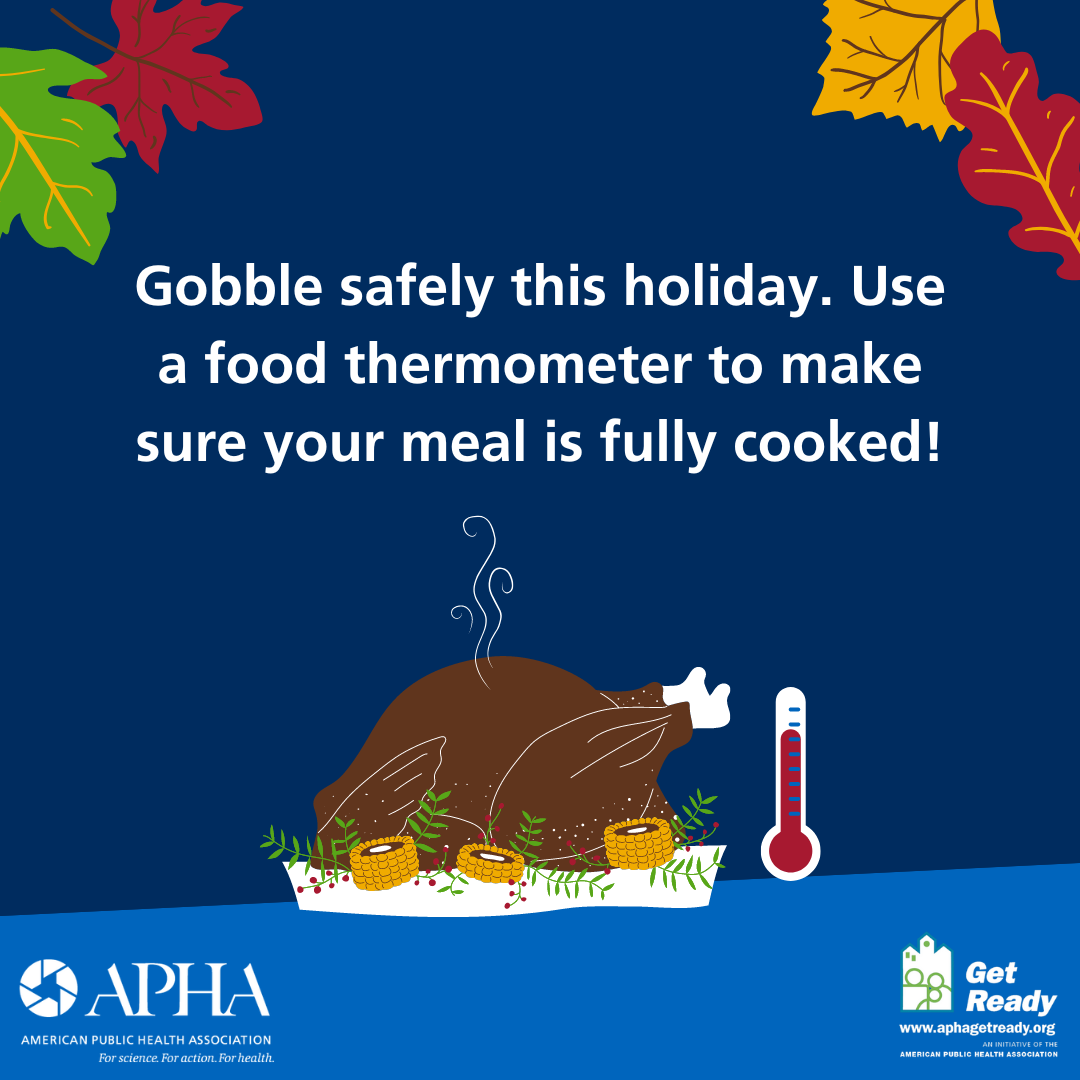
Use our food safety shareable to remind folks that their food needs to be cooked fully (165 degrees Fahrenheit for your turkey) to enjoy without risk for foodborne illness. 

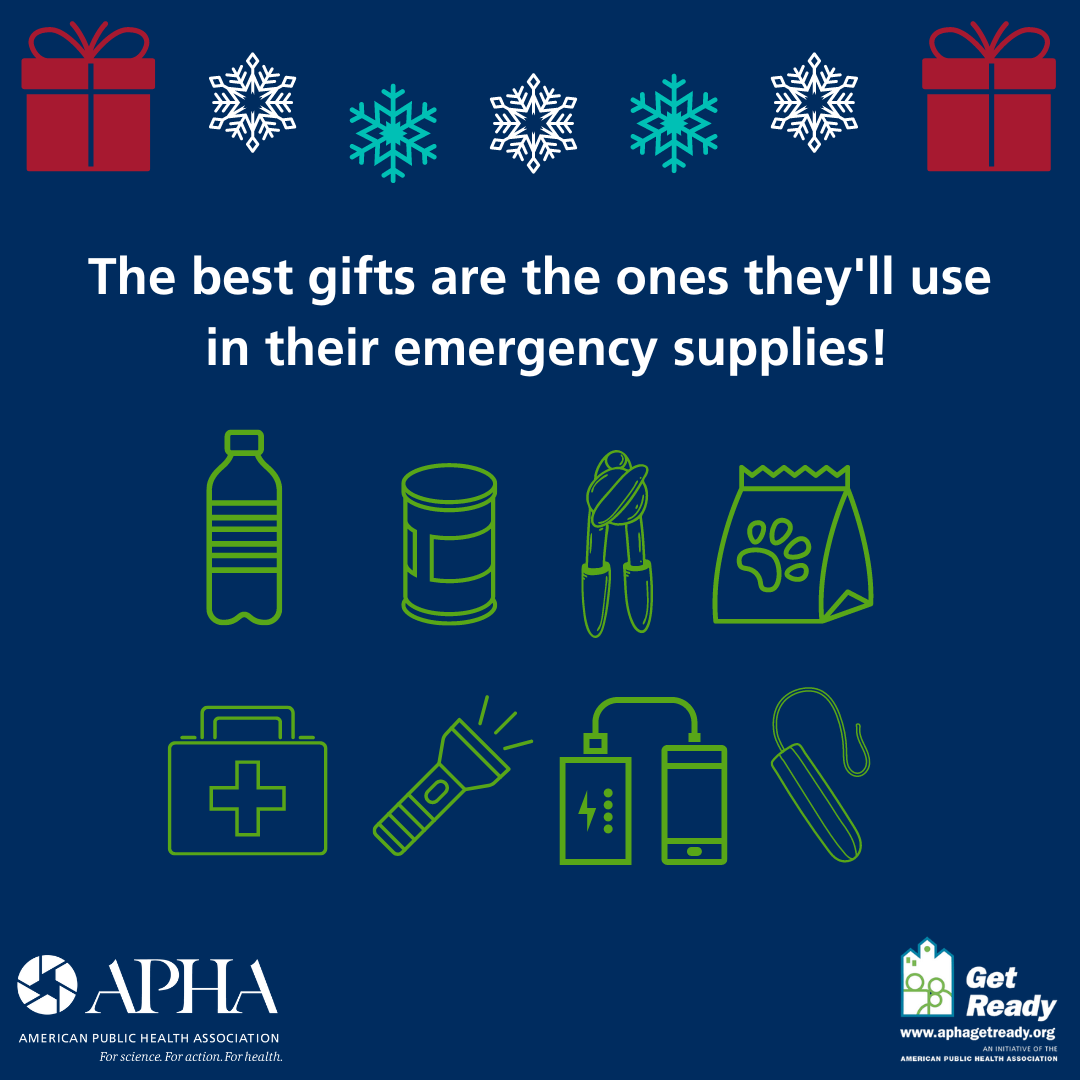
Use our emergency preparedness gift guide shareable to inspire your Black Friday shopping and beyond. You know family or friends won't return a present they'll definitely use!

Share our fire safety shareable to prevent home disasters this holiday season. Never leave candles or electric decorations unattended!


From our team to yours, Get Ready wishes you a very happy and healthy holiday season!

Wednesday, November 02, 2022

Get Ready for the APHA 2022 Annual Meeting

APHA 150 years logo Annual Meeting and Expo in Boston November 6 to 9

The APHA 2022 Annual Meeting is coming up Nov. 6-9 in Boston! There will be sessions and presentations in the Boston Convention and Exhibition Center and the Westin Boston Seaport District. Get Ready will have a booth in the APHA Central section of the Public Health Expo. We’ll have Get Ready swag and fact sheets about COVID-19, monkeypox and home disaster preparedness for you to take home. You’ll probably spend all day listening to the different sessions and presentations. If your device needs battery, our booth is giving out free power banks. You can win one by testing your knowledge with a fun trivia question about emergency preparedness. But don’t wait, there will be a limited supply! 

The Expo hours are:

  • Sunday, Nov. 6, 12:30-6 p.m.
  • Monday, Nov. 7, 10 a.m.-4 p.m.
  • Tuesday, Nov. 8, 10 a.m.-4 p.m.

The Annual Meeting will have a ton of sessions and presentations for you to check out. You may want to learn more about how to act in an emergency or what supplies to pack before a disaster strikes. If you’re interested in sessions about emergency preparedness, we have some suggestions to recommend. Don’t miss out!

Sunday, Nov. 6

2054: Lessons Learned, Vaccine Uptake, and Public Health Preparedness in the midst of COVID-19, 2:30–3:30 p.m. 

This poster session includes lessons learned from the pandemic, vaccine hesitancy and vaccine equity in the Latina/o/x and Hispanic communities.

2056: Public Health Preparedness in the midst of COVID-19: successes, challenges, and recommendations, 2:30–3:30 p.m. 

This poster session is about the effects of COVID-19 in Latina/o/x populations across the United States and what we can learn from this pandemic to prepare for the next.

Monday, Nov. 7

3009: COVID-19 and Emergency Health Services, 10:30–11:30 a.m. 

This poster session will talk about COVID-19 vaccinations and the emergency response during the COVID-19 pandemic.

3078: Disaster Response and Emergency Preparedness, 10:30 a.m.-noon 

This oral session includes topics on equity during a crisis, COVID-19 response and disaster preparedness. 

3229: Disaster Response and Emergency Preparedness, 3–4 p.m. 

This poster session touches on disaster preparedness, recovery and response.

Tuesday, Nov. 8

4117: Disaster Preparedness and Response In Community Health, 10:30 a.m.-noon

This oral session will talk about the impact of infrastructure disruptions in Puerto Rico, emergency response planning, the impact of natural disasters and health equity.

Wednesday, Nov. 9

5090: COVID-19 & Emergency Health Services, 10:30 a.m.-noon 

This oral session will talk about COVID-19 vaccinations and the emergency response during the COVID-19 pandemic.

We love meeting new people, but let’s remember to stay safe. The Annual Meeting will be a busy event with many people. Masks are required at APHA 2022. You will need to show proof of up-to-date COVID-19 vaccination. We recommend a flu shot, too.  We look forward to seeing everyone there!


Monday, September 19, 2022

Celebrate Get Ready Day with new resources from APHA


Tuesday, Sept. 20, 2022 is Get Ready Day! We celebrate Get Ready Day on the third Tuesday of every September, which is also National Preparedness Month. Get Ready Day is a chance for people to prepare their homes and their loved ones for emergencies like natural disasters or infectious diseases. Here are some tools you can use to share and celebrate Get Ready Day with us!

APHA's summer interns have recorded a podcast with tips about emergency preparedness, and different preparedness topics you may not have thought of before, such as climate change. Listen to the podcast or read a transcript now. 

The Get Ready team has also released two new infographics: one about the importance of masking as the COVID-19 pandemic continues, and one about flooding. 

You can also share the newly updated COVID-19 fact sheet from APHA, which answers questions like "why do I need a booster?"

To learn more about Get Ready Day and emergency preparedness throughout the year, follow Get Ready on Twitter or visit the Get Ready website. Happy Get Ready Day! 


Wednesday, September 14, 2022

Get Ready Day is next week!

Get Ready Day is coming Tuesday, Sept. 20. Learn more at APHAGetReady.org.

Get Ready Day
 is next week, Tuesday, Sept. 20! It is a day to remember the importance of emergency preparedness. It’s always held the third Tuesday of September and is part of National Preparedness Month

Being prepared is the easiest way to stay safe in the event of an emergency. Get Ready Day is a reminder of this. When you’re prepared for an emergency, you can help protect yourself and your loved ones from diseases and disasters. 

There are so many different things you can do to celebrate and spread the importance of emergency preparedness this Get Ready Day. You could hold a Get Ready Day event on your campus, in your community or workplace! Hosting an event is a great way to spread information and help show others the importance of emergency preparedness. Here are some suggestions:

- Hold an after-school community preparedness fair and invite students, parents and families 

- Sponsor a preparedness talk in your community 

- Pass out infographics, fact sheets or other materials on your campus or workplace (many can be found on www.aphagetready.org!)

- Post preparedness information and materials on community bulletin boards or around your school or workplace 

- Collaborate with local businesses to have them post or hand out preparedness fliers and information 

Hosting an event is a great way to spread information about emergency preparedness! But not everyone has the time or resources to do this. Some other things you can do are: 

- Put a link to preparedness information (or this blog!) on your website or social media account 

- Post a message about Get Ready Day on your social media to spread the word 

- Use the hashtag #GetReadyDay and follow @GetReady on Twitter 

- Post our social media shareables to your account

- Tell others about emergency preparedness resources 

- Look out for our Get Ready Day podcast next week 

- Encourage others to make emergency stockpiles, and refresh your own

Get Ready Day is a day to remember how important it is to be prepared. So get prepared – and put it on your calendar. Have a wonderful Get Ready Day! 


Wednesday, July 13, 2022

Get Ready Mailbag: What is Monkeypox?

Welcome to another installment of the Get Ready Mailbag, when we take time to answer questions sent our way by readers like you! Have a question you want answered? Send an email to getready@apha.org. 

Q: I live in the U.S. Should I be worried about monkeypox? 

Cynthia S. Goldsmith, Russell Regnery,
 courtesy CDC PHIL 

A:
We understand your concern. Monkeypox has been in the news a lot lately. But don’t panic! Knowing what monkeypox is and how to avoid it will help you be prepared. 

Monkeypox is nothing new. It was first discovered in 1958 when monkeys got sick with a rash. The first human case of monkeypox was in 1970. So, why are we hearing so much about it now? That’s because there is a 2022 outbreak of monkeypox. This means the disease was found in countries that normally don’t have it, including the United States

There is no reason to panic, but you should watch out for the disease and use good hygiene to avoid getting sick. 

As of July 12, the U.S. has a total of 929 monkeypox cases. The CDC is frequently updating its map of cases by state. 

Look out for these symptoms of monkeypox and go to the doctor immediately if you have any, especially a rash.  

Symptoms include: 

· Fever 

· Headache 

· Body aches 

· Chills 

· Feeling very tired 

· A rash 

A rash is very common with monkeypox. The rash is usually found on the face, mouth, hands and feet but can be located anywhere on the body. The rash typically looks like pimples, blisters or scabs. It can be itchy or painful. There is treatment available for people who get very sick, but this is rare. Most people get better on their own in 2-4 weeks. 

Monkeypox mostly spreads through skin-to-skin contact, saliva and by touching something an infected person has touched. Monkeypox spreads easily during sexual activity, but it is NOT a sexually transmitted disease. This means that it is not spread through vaginal fluid or semen, but it can spread through contact with skin or saliva which are common during sexual activities. Talk to your partner about any new sicknesses or unexplained rashes or sores. If you or your partner are feeling unwell or have a rash, avoid having sex or do so without saliva or skin-to-skin contact. In general, the best way to prevent getting monkeypox is to not touch a person with the illness or anything they have touched.  Wash your hands and use hand sanitizer, especially after being in public areas, to stay healthy.  

There are vaccines available to prevent monkeypox. The CDC recommends that men who have sex with men, who are currently at a higher risk, and people who have been exposed to monkeypox get vaccinated. It is also highly recommended that all individuals get vaccinated against smallpox. Since smallpox and monkeypox are similar, studies have shown that having the smallpox vaccine lowers your chances of getting monkeypox by 85%. The CDC has more information about vaccinations on its website. 


Thursday, June 30, 2022

Celebrating red, white and blue? Here are some safety tips for you

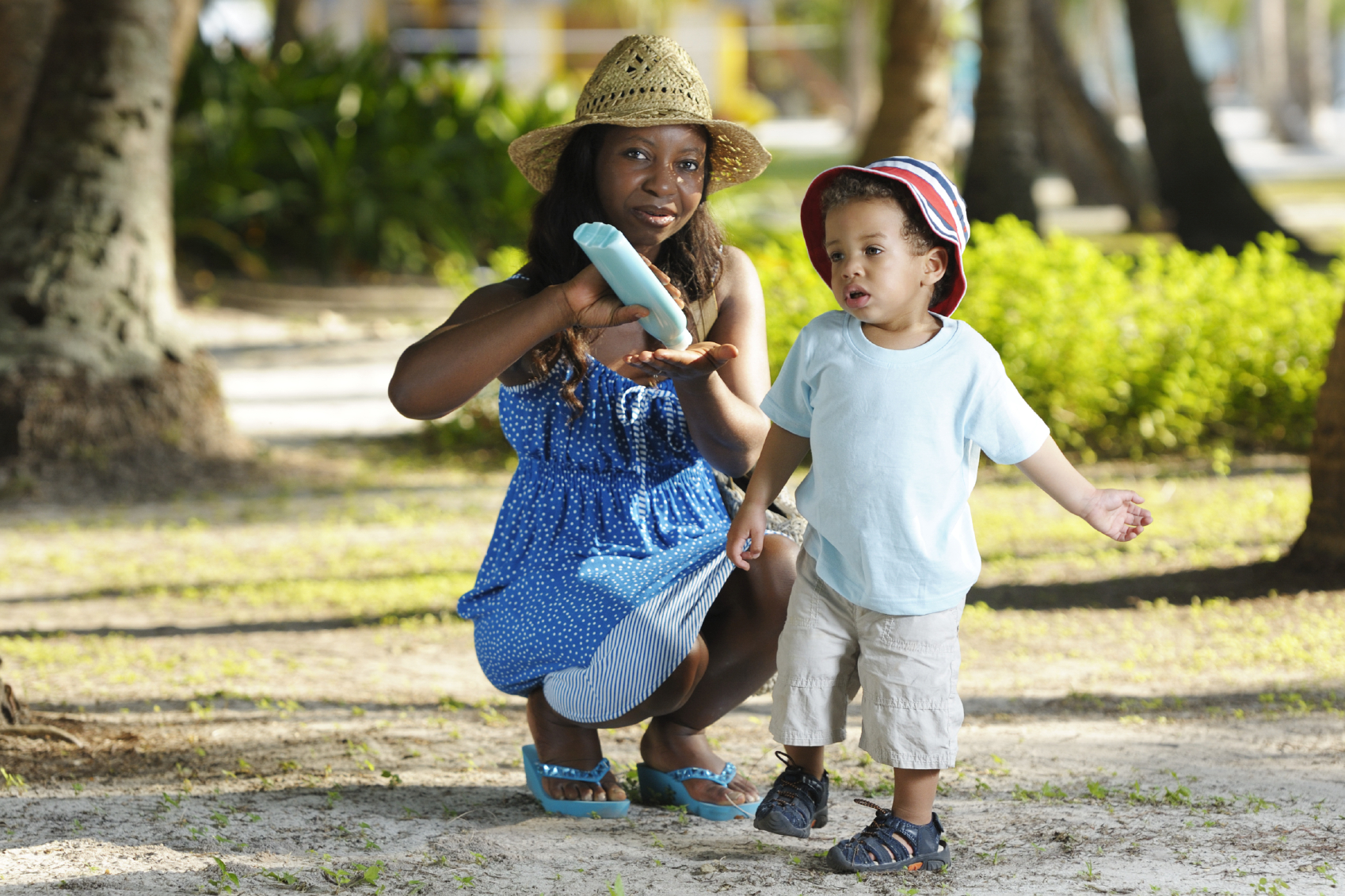
A mom puts sunscreen on a toddler. Both are wearing sunhats and light colored clothing.
By Lostinbids, courtesy iStockphoto
The Fourth of July is almost here! Whether you’re going to see fireworks, spending time with loved ones or just enjoying the sun, it’s important to stay safe in the summer heat. Follow these tips to get ready for summer fun! 

COVID-19

When heading out for the Fourth, remember to bring a mask and hand sanitizer. As people gather to celebrate, crowds will form. COVID-19 spreads easier when a lot of people are close together, especially indoors. Wear a mask and keep your distance to lower your risk of getting sick. Keep in mind that the summer heat can make the mask you’re wearing sweaty or damp. Swap your mask for a new one if this happens. Bring extras and wear your mask over your nose and mouth to avoid the spread COVID-19. 

Summer heat 

While the sunshine is nice, it’s important to drink water and stay cool when outdoors. Apply sunscreen before heading outside to prevent painful sunburns. The FDA recommends using sunscreen with an SPF of at least 15 and reapplying at least every two hours to keep your skin protected. Apply more often if you’re in the water or sweaty. Wear a hat, sunglasses and light-colored clothing to stay cool in the hot sun. Remember to drink a lot of water to stay hydrated. Steer clear of alcohol and caffeine because these will dehydrate you faster. 

Bug bites

Want to avoid itchy, puffy bug bites? Use insect repellent, or “bug spray,” before heading outside, especially in the evening. Look for a spray with DEET in it for the best bug protection. DEET is safe for everyone to use, even if you’re pregnant or breastfeeding. Wearing long-sleeved shirts and pants will also prevent bites from mosquitos and other bugs. 

Follow these tips to have a safe and fun Fourth of July and summer! You can find more information on staying healthy and safe this summer from Get Ready. 


Wednesday, November 24, 2021

Get Ready for Thanksgiving: Ways to keep your loved ones safe this holiday

The holiday season is finally here! After so much time apart, many people are excited to reunite with their family and friends for Thanksgiving on Thursday, Nov. 24. This year, many families are back in the holiday spirit and can't wait to return to their favorite holiday traditions. 

As you and your family prepare for Thanksgiving, make sure health and safety are also in your plan. Get Ready has new social media shareables to help spread good health and good cheer this holiday season. Check them out here:

COVID-19 Safety

Like 2020, celebrating the holidays looks different with COVID-19 still around. But there are many safe ways to enjoy the holidays. One way to stay protected is to ensure that all eligible family members get their COVID-19 vaccinations before coming together on Thanksgiving. While the CDC has recently approved vaccination for anyone above the age of 5 years old, some of our friends and family members still may not be fully vaccinated in time for the holidays. The CDC says that getting vaccinated is the best way to protect yourself and those that aren't eligible like young children and high medical risk family members. 

Some of our family members are at higher risk for the COVID-19 virus, and it's important to think about their safety and protection. 

If you are feeling sick or have any COVID-19 symptoms, don't pass it along to others at the dinner table. Keep your friends and family healthy by staying home until you are symptom-free. Vaccinations and other safety practices like mask-wearing, frequent hand-washing and avoiding large crowds of people outside your friends and family will help reduce everyone's risk for COVID-19 during Thanksgiving. 

Before traveling, the CDC recommends that you check the current COVID-19 situation where you’re visiting. The CDC has a helpful tracker that shows how the virus may be spreading in communities. Share this tracker and other CDC travel recommendations with your family and friends to keep them informed before traveling this holiday season. 

Food safety

COVID-19 is not the only illness that can spread on Turkey Day. Food-borne illnesses are also common during the holidays. The USDA says that your turkey and stuffing is not safe to eat until it reaches 165° F. Using a food thermometer, check the internal temperature of your turkey in three places: the thickest part of the breast, the innermost wing and the innermost thigh. If your turkey has not reached a safe temperature in all three places, it’s not ready yet. Simply give it more time to cook in the oven. Wait about 20 minutes for the juices to settle into the turkey before carving. Now your fully cooked and healthy turkey is ready to serve at the Thanksgiving dinner table. Check out the USDA’s helpful infographics to learn more about food safety during the holidays. 

You can prevent food-borne illnesses by having clean hands. Before, during, and after handling your turkey, wash your hands with warm soapy water for at least 20 seconds. Washing your hands helps fight germs and will keep you and your family healthy at Thanksgiving dinner. The CDC has more tips on how to keep your holiday turkey and stuffing safe and healthy for your guests to enjoy. 

Fire safety 

Emergencies like house fires and other disasters can still happen during the holidays. In fact, the National Fire Protection Association says that Thanksgiving is peak time for home cooking fires.  Fires are one of the quickest ways to cut Thanksgiving dinner short. Most cooking fires in the home involve the kitchen stove

Avoid cooking fires by staying close to your stovetop and setting a timer for your food. Whether you are frying in the kitchen or grilling outside, don’t leave your food or heat unattended and especially keep children away from cooking areas. Even if you are away for a short time, turn off the stove to save you and your family from a fire at home. The Red Cross has a list of ways to prevent fires on Thanksgiving that you can learn about before hosting this holiday. 

Thanksgiving should be spent spreading gratitude and love, instead of COVID-19, food-borne illnesses or cooking fires. Together we can have a safe and healthy holiday season!


Tuesday, October 19, 2021

Double protection is worth a shot...or two!

Bring in the fall by getting ready for flu season! Flu season can begin as early as October and last until May. However, the flu virus tends to spread the most between December and February. This year, flu season arrives while we’re still battling COVID-19. To protect yourself against both viruses, getting your flu and COVID-19 vaccinations will be super important this season. 

While 2020-2021 brought low seasonal flu activity, CDC expects that flu cases will spike back up earlier than usual this season. Last season, flu activity was down because of COVID-19 safety measures. Wearing masks and staying six feet apart in public places helped people stay protected against the flu. 

This flu season will not look like any other year. Schools, offices, and other public places are reopening with fewer social distancing rules. People are traveling again and returning to activities. They may be near larger crowds or be more reluctant to wear a mask. Now is the best time to learn about ways to protect yourself from both the flu and COVID-19. For more information on preventing the flu, check out Get Ready’s fact sheets. 

Get Ready is preparing communities for flu and COVID-19 season in its newest infographic about both vaccines. Share this infographic with your friends and family to get everyone on board with double protection this year! 

The vaccines are super safe. Each protects you from a different virus. You can even get them at the same time. COVID-19 vaccines are free to everyone in the U.S. You can get a flu shot for little to no cost. Vaccines are protections that work together with hand-washing and mask wearing. Every shot is worth a lot. It helps your family, friends and community stay healthy together!

Here are four things to keep in mind when getting both flu and COVID-19 vaccines: 

1. Safety

 
The CDC says both vaccinations are safe and effective. You can even get both shots in the same visit. The  flu and COVID-19 are serious infections that can spread quickly from person to person. Both viruses spread from droplets that we all exhale. A simple cough or sneeze from one person with the flu or COVID-19 can make other people sick. Getting both vaccines will help your body fight off illness and reduce the spread of both viruses. 

2. Cost and Access


In the United States, everyone ages 12 years and older can get their COVID-19 vaccination for free.  Use this vaccine locator tool to find the closest vaccine site to you. 

Anyone over 6 months old can get a flu shot. You can get a flu shot for free or low cost, especially if you have health insurance. Many local health departments, grocery stores, schools and workplaces offer them for free, too. 
Schedule both flu and COVID-19 shots as soon as you're available. The CDC recommends everyone get their flu shots before the end of October.

3. Staying Protected

Vaccinations are extra layers of protection. But they can’t prevent every case of COVID or flu. They should be paired with other health and safety measures. Wash your hands often and wear your mask when around others. Get Ready has helpful guides on hand-washing.

4. Community Impact 


Getting both vaccinations helps protect you and others around you. Sometimes people with health conditions have immune systems that are not strong enough to fight against viruses on their own. When more people get their flu and COVID-19 vaccinations, their communities can be healthier.  

Every shot is worth a lot this fall and winter!  


Thursday, September 16, 2021

Plan, protect and pack up for Get Ready Day

Get Ready Day is almost here! It’s a great time for you to make sure you’re prepared for an emergency. Every year, Get Ready Day is held on the third Tuesday in September to celebrate National Preparedness Month to help our families and local communities stay safe and healthy. With hurricane season and COVID-19 still going strong, this year's Get Ready Day on Sept. 21 will be packed with the key tools that you, your family and friends need to get through both disasters! 

The National Oceanic and Atmospheric Administration warns communities to prepare for an above-average hurricane season in 2021. While the Atlantic hurricane season started on June 1, it has no signs of slowing down until after Nov. 30. Get Ready has fact sheets in English and Spanish to help you prepare for hurricanes and other natural disasters. Use the National Hurricane Center’s interactive map to track the hurricane risks for your area. 

The pandemic means your hurricane prep might look a little different this year. Get Ready has released a new infographic to highlight how to protect yourself and your family during the hurricane season. You can share this infographic so everyone knows how to start the 3 P’s on Get Ready Day:

3 P's to prepare for COVID-19 and hurricane season
Plan: You and your family should plan your safest evacuation route now. If you need to go to a shelter, choose one that isn't overcrowded to reduce the COVID-19 risks. Follow the Centers for Disease Control and Prevention’s tips for protecting yourself and your community

Protect: Protect yourself and those around you by getting your COVID-19 vaccine (one or two shots, depending on which one you get) before the actual emergency. The vaccine is safe and reduces your risk of getting COVID-19. If you do catch the virus, you are less likely to be very sick. Getting sick during a hurricane is dangerous. Emergency workers and hospitals are harder to reach and busier during and after a disaster. It’s important to take this step for your health and safety. 

Pack: Your go-bag needs a few extra items this year. Grab them before the emergency! Make sure to prepare a stockpile of masks, hand sanitizer, bottled water and other medical supplies for hurricane season.

Now that you have your 3 P’s, celebrate emergency preparedness on Sept. 21! 


Thursday, August 26, 2021

Get Ready’s Summer 2021 Infographics

This summer’s heat wave has broken records in many parts of the country. The hot, dry weather can make droughts worse and increase risk of wildfires, especially in western states. Get Ready has created two new infographics to help you prepare for both droughts and wildfires. Make sure to follow @GetReady on Twitter for these infographics and more preparedness tips.


Droughts

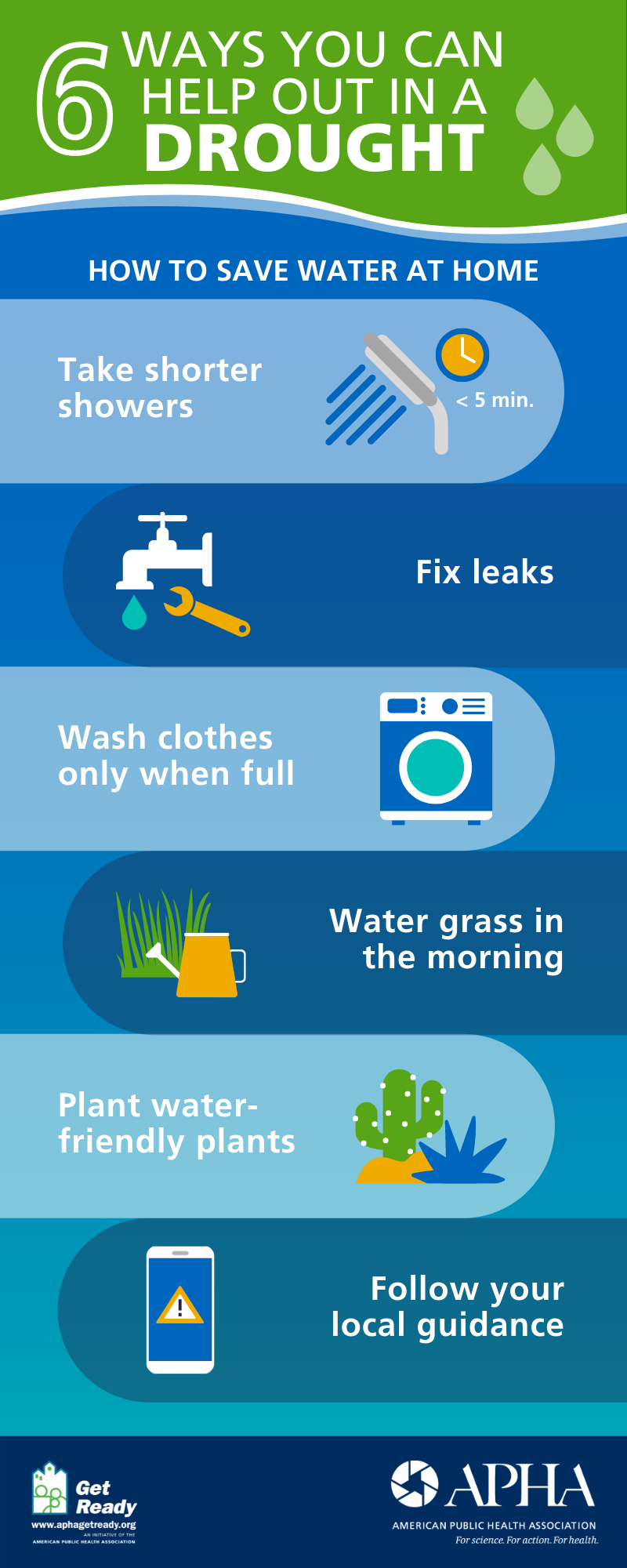
This first infographic is called “6 Ways You Can Help Out in a Drought.” These are just some of the small ways to save water at home. For example, you can take showers in under five minutes. It’s also important to fix leaks in your plumbing. Fixing leaks can save up to 110 gallons of water a month. That’s more than 1,300 gallons every year!

Infographic on preparing for a drought. Tips include take shorter showers, fix leaks, wash only full loads of laundry, water grass in the morning, plant water-friendly plants, and listen for local alerts.
Drought infographic

Your garden and yard also use lots of water. Make sure you water your grass in the early morning or at night when it’s less hot out. Think about switching to plants that use less water and are native to your area

Most importantly, always follow state and local rules on water use in a drought. Check out the drought fact sheet for more info.


Wildfires

This second infographic is titled “Wildfire Safety.” It lets you know how you keep your family safe before and during a wildfire.

How to prepare for wildfires. Tips include check smoke detectors, get local fire alerts, listen for evacuation instructions, know your escape routes, make copies of important documents, have an emergency contact list, and have a go-bag ready.
Wildfire infographic

Make sure all members of your household know the emergency plan and escape routes. Prepare a go-bag with important supplies like medications and masks for the smoke. Also make copies of important documents to take with you if you must evacuate. 

If there’s a fire near you, listen to local officials about how to safely evacuate. Sign up for community fire alerts to stay in the loop if there’s an emergency. Check out our wildfire fact sheet for more detailed tips.

For general tips on getting through the summer heat, check out our heat wave fact sheet.

Friday, April 23, 2021

Guest post: College students: Think you’re immune from COVID-19? Think again

Avalon Aragon is a public health student at the George Washington University who is interning with APHA’s Get Ready campaign. Earlier this year, she was diagnosed with COVID-19. She is sharing her experience with COVID-19 — how she felt, what she did and what she’s learned.  

How did I get COVID-19? To be honest, I’m not sure. I had a normal weekend and did the same things I usually carefully do with my social bubble. The members of my bubble — who agree to follow safety precautions and limit contact with other people — went on walks, did grocery shopping and otherwise safely spent time together. Then the week started. People in my bubble started to feel sick. We all got tested for COVID-19, and most of our group was positive, including me. 

Right away, I felt so many emotions. I was scared, sad, upset, worried and stressed. The local health department called me to do contact tracing. They helped me to talk with everyone I’d recently had contact with. It was hard to tell people I had COVID-19, but I knew it was for the best to keep everyone safe and healthy. 

For the next 10 days, I followed my doctor’s recommendations: I drank lots of fluids, ate balanced meals, got lots of sleep and stayed away from others. I also let my professors and bosses know my situation. Everyone was understanding. They told me to focus on my health and to not worry about work or due dates. I kept a log of my symptoms, which fortunately were mild. With the help of my friends, I was able to get necessities delivered to me so I did not have to leave my apartment. 

Overall, the experience was an emotional one. It was hard to be alone for 10 straight days. I did not have my parents to take care of me. I wasn’t able to see my friends and do things we always do, like our daily walks. I took time to rest and focused on getting better. I’m so grateful I didn’t have severe symptoms and was able to fully recover, as did my friends in my bubble.

Moving forward from COVID-19
I was very fortunate not to become severely ill from COVID-19. A lot of people my age think that they aren’t going to get sick from this, or that they won’t pass it to others. But that’s not true. 
Last summer, people under 30 made up more than 20% of COVID-19 cases, and they were very much giving it to other people around them, including their friends and families. When young adults get COVID-19, they end up hospitalized in intensive care about 20% of the time. Since the pandemic began in the U.S. last year, more than 2,000 people ages 18-29 in the U.S. have died from COVID-19. In light of my own experience, those facts are very sobering to me. It could have been much, much worse.

I know there are many people who haven’t fully recovered from COVID-19 like I did. The long-term effects some people have — including young people — are scary. Wearing a mask and following other health and safety guidelines are important to both end this pandemic and protect those at high risk for severe illness.

Even though I’ve recovered, I continue to follow guidelines to protect myself and others from COVID-19. I wash my hands, wear a mask and maintain physical distance. I’m looking forward to getting vaccinated! Now that COVID-19 vaccines are open to all, I highly recommend that everyone my age get theirs too.

This experience was not an enjoyable one, and I hope other college students continue to take care and remember it’s not just their lives they’re risking. 

Check out these tips for college students from CDC for more information on how to stay safe.