Tuesday, December 20, 2016

Get ready for cuteness overload! Our new Get Ready Calendar is here

It’s the most wonderful time of the year: Time for your new Get Ready Calendar! The latest edition of our annual preparedness calendar is available and it’s loaded with cuteness.

From wagging puppy tails and sleeping kittens to fuzzy goats and furry squirrels, “Awwwwwpocalypse! APHA’s 2017 Get Ready Calendar” is full of squee. This year’s calendar may be our most adorable yet, as the theme is baby animals. That’s right: 12 months of fluffy, big-eyed, sweet-faced baby animals. Awwww.

Photographers submitted hundreds of photos of baby animals in our annual contest. And though we wanted to share them all, we had to narrow it down to just 20 cutetastic pics for the calendar.

But it’s not all fluff: Every image is accompanied by preparedness tips. So you and your family, friends and colleagues can learn how to get ready for disasters each month. Print a copy for your refrigerator, your bulletin board and your cubicle. They even make great stocking stuffers or Hanukkah gifts!

Once you’ve printed your copies, be sure to share the link on social media and on your website, so that others can enjoy yearlong adorableness and get prepared.

Wednesday, December 14, 2016

Potluck food safety: Don’t bring uninvited germs to your party

Potlucks are great places to hang out with friends and family and eat some great food. But if you don’t follow food safety, they can also be places for trouble. 

Cooking for potlucks or large groups means you need to take extra steps to keep food safe. The large numbers of people, crowded space and buffet-style food set-up can spell a recipe for disaster.

You can get sick when germs are present on the food you eat. This is called food poisoning and can make you feel really sick. Germs can get on food at any point during food handling, cooking or storage. The Centers for Disease Control and Prevention estimates that over 48 million Americans get food poisoning every year. The risk is highest for young children, seniors and pregnant women.

But there are many ways to keep your next potluck event more yum than yuck.

The U.S. Department of Agriculture says food safety begins at the sink. Make sure to wash your hands before making food and always wash fruits and vegetables before use. Use clean counter space, utensils and storage containers for your food. Never re-use cutting boards or knives that have been used with raw meat before washing.

Some dishes make better party guests than others. The Food and Drug Administration says egg-containing dishes like mayonnaise, homemade Caesar salad dressing, chocolate mousse and deviled eggs need extra care. Make sure to keep these dishes in the fridge right until party time. It’s best if you can put out small portions of these foods. That way, you can replace the plate with fresh food from the fridge or cooler throughout the party.

When transporting and serving — avoid the danger zone! Bacteria can quickly multiply in temperatures between 40 degrees and 140 degrees. So keep food above or below these temperatures. To keep foods hot, use warming plates or slow cookers and to keep it cold, use ice. Have small spoons ready for dips or sauces to keep people from dipping food directly in these shared bowls.

Stick to the two-hour rule: Food should not be left out at room temperature for more than two hours, according to USDA. After two hours, food should be thrown away. If the event is outside and the temperature is over 90 degrees, throw out after one hour. If in doubt, throw it out.

To keep your next event safe, spread the word and dish out this advice to others bringing food to the party!


Wednesday, December 07, 2016

Spending time with friends and family this season? Get your flu vaccination now

The holidays are almost upon us! That means good times, good cheer and lots of time with friends and family.

While you’re hugging grandma or holding your cousin’s new baby, you don’t want to give them the flu, right? (And you certainly don’t want to catch it from your always-snot-covered nephew.)

The best way to protect yourself and others is to get your flu shot and get it now. It takes about two weeks after your shot for all that awesome flu vaccine protectiveness to kick in, so this is great timing.

In fact, it’s National Influenza Vaccination Week, meaning there’s probably a flu clinic nearby you right now. Or drop by your local pharmacy or walk-in clinic.

This way, you’ll only be spreading joy to the people you care about this season — and not whatever is on your plane tray or door handle. (Speaking of which, don’t forget to wash your hands. A lot.)

Help spread the word about holiday flu preparedness with our super-cute new Get Ready graphic and check out our other holiday images.

Wednesday, November 30, 2016

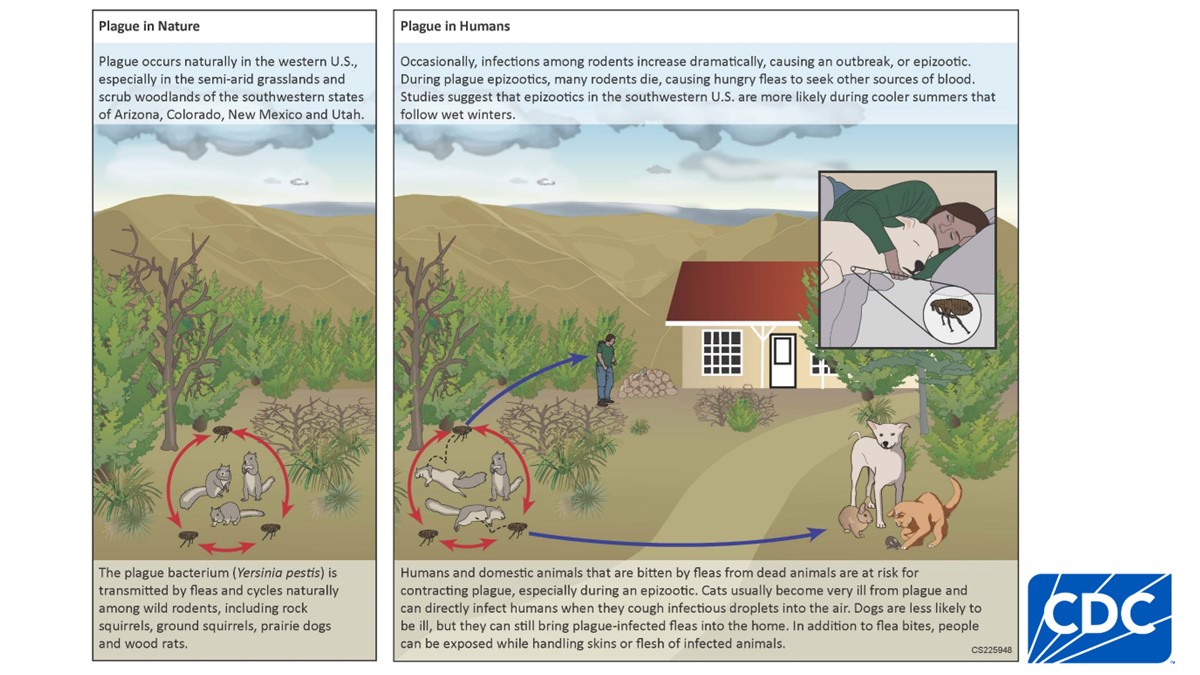
Plague: It’s not just in the history books

Are you at risk for plague? Just hearing that question may make you do a double-take: Isn’t plague the disease that killed a lot of people that we learned about in school? Sadly, plague isn’t in the past with those awkward school memories. But just like bowl haircuts, it doesn’t have to be in your future.

Plague is an infectious disease caused by a bacteria, Yersinia pestis. It’s transmitted by fleas and occurs among animals and humans, including their pets. It usually affects seven people each year in the U.S., according to the Centers for Disease Control and Prevention. Worldwide, as many as 2,000 cases are reported annually.

The bubonic plague is the most common form and most commonly comes from the bite of an infected flea. You can also get plague from infected animals or from inhaling droplets from someone who has the disease.

Most Americans who get plague are in western states. People who live in Colorado, north-central New Mexico and southwestern and northeastern California are especially at risk, according to a recent study.

The main symptoms to look for with plague are swollen, painful bumps in your armpit, neck or inner thigh. Other warning signs are getting really hot or cold, headaches, feeling exhausted or having a bad cough. It usually takes one to six days after being infected for symptoms to start.

It’s easy to ignore symptoms and just hope they will go away, like some of us do with overeating on Thanksgiving, but ignoring the plague will lead to much worse problems than a food baby. If you think you have plague, CDC recommends that you see a doctor, who can give you antibiotics to treat the disease. While plague-related death rates are nowhere near what they were in historical times, people do still die from the disease.

So, how do you prevent plague? Just in case you haven’t had your coffee or been rattled awake by your commute today, here are three easy-to-remember tips from CDC:

  • Get rid of places rodents might want to live around your house.
  • Use insect repellent on yourself and your pets.
  • Avoid picking up or touching sick or dead animals, and when you do, wear gloves.

You can also let your local health department know about sick or dead animals in the area and not let your animals sleep in your bed.

Knowing this, we can hopefully keep plague outbreaks in the past.

Tuesday, November 22, 2016

Thanksgiving food tips from USDA: When it comes to the bird, safety’s the word

Today’s guest blog on turkey safety is by the U.S. Department of Agriculture’s Food Safety and Inspection Service.

USDA Thanksgiving Food Safety Infographic
Whether you’re a Thanksgiving cooking pro or newbie, preparing one of the largest meals of the year can be stressful. To avoid making mistakes that could cause foodborne illness, the U.S. Department of Agriculture’s Food Safety and Inspection Service wants you to be aware of these common Thanksgiving myths:

  • Myth: You should wash your raw turkey
    Food safety experts — including us at USDA — don’t recommend washing raw meat and poultry before cooking. Many bacteria are quite loosely attached, and when you rinse these foods the bacteria will be spread around your kitchen. In fact, research shows that washing meat or poultry in water spreads bacteria throughout the kitchen — onto countertops, other food, towels and you. Water can splash bacteria up to three feet surrounding your sink, which can lead to illnesses.

    Researchers at Drexel University have shown that it’s best to move meat and poultry straight from package to pan, as the heat required for cooking will kill any bacteria that may be present.
  • Myth: You can’t cook a frozen turkey
    If your turkey is still icy on Thanksgiving morning, don’t panic! It’s perfectly safe to cook a turkey from the frozen state. It’ll just take longer to cook. A solidly frozen turkey will take at least 50 percent longer to cook than a thawed turkey. If you cannot separate the giblet package from the turkey at the start, just remember to remove it carefully with tongs or a fork a few hours into the cooking process.
  • Myth: The bird is done when juices run clear
    Do you check if your Thanksgiving turkey is done by poking the turkey to see if the juices run clear? Do you also keep repeating this process until everyone is hungry and you are left with a dry turkey?

    The only way to determine if a turkey is safely cooked and ready to serve is to take the temperature of the turkey with a food thermometer in three locations: the innermost part of the thigh, the innermost part of the wing and the thickest part of the breast. The thermometer should read 165°F.

    The juices rarely run clear at this temperature, and when they do the bird is often overcooked. Using the food thermometer is the best way to ensure your turkey is cooked to a safe internal temperature, but not overcooked. 


If you have any Thanksgiving myths you want to check out, call the USDA Meat and Poultry Hotline at 1-888-MPHotline — 1-888-674-6854 — where you can talk to a food safety specialist in English or Spanish between the hours of 10 a.m. and 4 p.m. EST, or chat live at AskKaren.gov. The Meat and Poultry Hotline will even be open on Thanksgiving Day from 8 a.m. to 2 p.m. EST to take last-minute calls.

Download and share USDA’s turkey safety infographic in English or Spanish.