Showing posts with label antibiotics. Show all posts

Tuesday, November 24, 2015

It’s time to get smart about antibiotics

Did you know that every year, at least 2 million people in the United States are infected with bacteria that can’t be cured by antibiotics — and at least 23,000 die because of it?

Antibiotic resistance makes some medicines unable to stop or heal sickness. But it doesn’t have to be that way. Centers for Disease Control and Prevention scientist Arjun Srinivasan, MD, told us that we all have a role to play in keeping antibiotics effective. During Get Smart About Antibiotics Week, he told Get Ready several “simple things like cleaning your hands properly using soap and water” and getting flu shots can help.

“What these things do is they reduce your chance of getting ill,” he said. “And we know if you don’t get ill, you’re less likely to wind up in a doctor’s office or an emergency department where you might get an antibiotic prescription that you may not need.”

Listen to our podcast with Srinivasan, and learn how you can get smart about antibiotics.

Tuesday, November 19, 2013

Knowing when antibiotics work — and when they don’t


http://www.cdc.gov/features/getsmart/largechart.html
From Centers for Disease Control and Prevention
It’s Get Smart About Antibiotics Week, an annual event promoted by the Centers for Disease Control and Prevention. The week teaches people how to use antibiotics the right way and draws attention to the growing problem of antibiotic resistance.

Antibiotics are crucial for treating and curing bacterial infections, and it’s very important to use them exactly as your doctor advises. This means that you should only take the prescribed dose and complete the full course of an antibiotic, even if you feel better before you run out of medication. Otherwise, you may get re-infected by bacteria that’s still inside you.

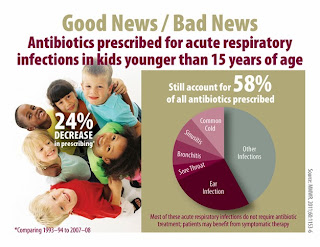
We tend to think that antibiotics work for every illness, when actually they don’t. Antibiotics only work against infections caused by bacteria. Antibiotics don’t work against infections caused by viruses. The flu and common colds are caused by viruses, so those sniffles and aches aren’t going to be cured by an antibiotic.

Using antibiotics when they aren’t needed can be harmful. If they aren’t used correctly, antibiotics can stop working. In fact, some diseases that were treatable with antibiotics have already become resistant to them, meaning they don’t work as well as they should, or worse, don’t work at all. Taking antibiotics when they are not needed or misusing them also increases the risk that an infection you get later will resist antibiotic treatment.

CDC has more tips for using antibiotics wisely:
  • Get smart about what kinds of upper respiratory infections are usually caused by viruses and can’t be cured with an antibiotic.
  • Take antibiotics only if they’re prescribed to you. Don’t share and or use leftover antibiotics.
  • Don’t save your antibiotics for the next time you get sick. Properly dispose of any leftover medication once your prescribed dose is complete.
  • Prevent infections by practicing good hygiene, such as frequent hand-washing, and getting recommended vaccines.
  • Don’t ask for antibiotics when your doctor doesn’t think you need them. Antibiotics have side effects, and taking them when they’re not essential may do you more harm than good.
Now that you know how to be smart about antibiotics, spread the word! Send a CDC e-card, add a logo to your website and read this helpful tip sheet from APHA.

Tuesday, November 13, 2012

Make sure your medicine works when you need it: Get smart about antibiotics!

Picture this: You’re coughing and sneezing. Not sure if you have a cold or the flu, you head to the bathroom and open the medicine cabinet. Checking through the bottles of pills, you find some antibiotics. Should you take them?

The answer is NO. You could be doing more harm than good! Here’s why:
  • Colds and the flu are caused by viruses. Antibiotics don’t work on viruses.
  • Taking an antibiotic when you should be taking some other kind of medication can lead to something called antibiotic resistance. Antibiotic resistance happens when bacteria are exposed to an antibiotic medication so much that they figure out how to survive around the medication. This means that medications that treat all kinds of infections won’t work any more. 
  • Antibiotic resistance is one of the most serious public health threats around the world, and it’s becoming more common. 
The good news is that you can help to fight antibiotic resistance. Nov. 12-18 is Get Smart About Antibiotics Week, which was created by the Centers for Disease Control and Prevention to help educate the public about antibiotics so they can make smart choices when it comes to taking medications. Here are five tips to protect your health:
  1. Do not take antibiotics for a viral infection like a cold, the flu or a runny nose. Here is a chart from CDC to help you figure out if you might have a viral infection. If you’re sick, the best thing to do is to call or make an appointment with your health care provider.
  2. Do not ask for antibiotics for you or your child if your doctor says you don’t need them.
  3. Do not take antibiotics that were prescribed for other people or for other kinds of infections. The antibiotic might not treat the illness that you have, so you could get sicker.
  4. If your health care provider prescribes an antibiotic, take it exactly as they tell you. Finish the whole dose even if you start feeling better before the medication runs out. Don’t skip doses and don’t save medication for the next time you or someone else gets sick.
  5. Wash your hands to prevent infections. (Check out our fact sheets for great handwashing information!) Make sure to wash with soap and water or alcohol-based hand sanitizer gel. Regular soap and water are fine, but avoid soaps and cleaners that say “antibacterial” on the label. These products usually have an antibiotic called triclosan, which may contribute to antibiotic resistance.
For more information to help you get smart about antibiotics, check out this Healthy You fact sheet from The Nation’s Health: Antibiotics: Know when they’re not needed. Feel free to share this with friends, family and coworkers too – Everyone has to get smart about antibiotics so that the medications work when we really need them!

If you use Twitter, join us on Tuesday, Nov. 13, at 1 p.m. EST for a Twitter chat about antibiotics. Experts from the CDC will be there to answer your questions. Follow @CDC_eHealth and @GetReady to join in, and don’t forget to use the tag #SaveAbx.