Showing posts with label CDC. Show all posts

Thursday, March 23, 2017

Deadly bites: Protecting yourself against Lyme disease

What do frost, a mosquito and a tick have in common? Their bites can be deadly. But only a tick can spread a serious illness called Lyme disease.

The Centers for Disease Control and Prevention says there are over 30,000 new cases of Lyme — pronounced like “lime” — disease every year. It is mainly caused by one type of bacteria, Borrelia burgdorferi. But last year, scientists discovered a new species of bacteria in deer ticks that also causes Lyme disease. This species, Borrelia mayonii, can be found in the upper Midwest U.S. (Note: The new bacteria are named after the founders of the Mayo clinic where some of the researchers work — not mayonnaise!)

So what does this new bacteria mean? Should I be worried?

Don’t freak out! New bacteria, same risk. This new bacteria poses similar dangers. You should still guard yourself and your family carefully against ticks, as Lyme disease is spread when an infected tick bites a human. It is mainly reported in the northeastern U.S. and upper Midwest.

Lyme disease caused by both B. burgdorferi and B. mayonii can cause fever, headache, rash and neck pain. But while B. burgdorferi can cause a bull’s- eye-like rash, B. mayonii has a diffuse rash. B. mayonii is also associated with nausea and vomiting.

Either way, you can help guard yourself against tick bites by wearing long sleeves and pants, and staying on trails when hiking. Spray yourself with an insect repellant that has DEET if you are going outside. As Harry Potter’s Mad-Eye Moody would say, “Constant vigilance.”

Check yourself for ticks and symptoms of Lyme disease before you wreck yourself! Be thorough: Examine your feet, ankles, armpits, groin and neck carefully. These are the places that ticks love the most. And remember to check your pets, too.
CDC tick removal tips.

Lyme disease is usually treated with antibiotics, but it gets harder to heal the longer you wait for treatment. If you see that you have been bitten by a tick, carefully remove it with tweezers. Ask your doctor about being tested for bite-related diseases.

For more tips on avoiding ticks and Lyme disease, check out our Get Ready fact sheet. 

Thursday, February 23, 2017

Flu is here, and it’s widespread. Get vaccinated.

Want more public health memes?
It’s official: the flu is more widespread than Bieber fever.

According to the Centers for Disease Control and Prevention, the flu is widespread throughout most of the U.S. and case counts have been increasing. Serious influenza activity was reported in 46 states and Puerto Rico as of Feb. 11, says CDC’s weekly FluView report.

From October to mid-February, more than 8,222 people had been hospitalized in the U.S. because of the flu. Tragically, at least 29 children have died from flu this season. The flu can cause serious illness in children under 5 and adults over age 65, as well as pregnant women and people with chronic medical conditions. But, just like Bieber’s sweet jams, everyone is susceptible.

Annual vaccinations are the best way to prevent flu and its complications. Yearly flu shots are recommended for everyone ages 6 months or older, so if you’re not a baby — baby,baby, baby, ohhhhh — then ask your doctor or local pharmacist about getting a flu vaccine.

For this flu season, CDC recommends that your vaccine come in the form of the flu shot. The nasal spray flu vaccine shouldn’t be used this year, because it wasn’t shown to be effective.

It might be too late now to say sorry, but it’s not too late to get your flu shot and protect yourself, your family and your community from the flu! 

Wednesday, August 31, 2016

CDC shares tips to protect Americans from the Zika virus

What do you need to know about Zika? That depends on who you are, according to the Centers for Disease Control and Prevention.

APHA’s Get Ready Report podcast recently spoke with Ben Beard, PhD, branch chief for the Bacterial Diseases Branch in the Division of Vector-Borne Disease at the National Center for Emerging and Zoonotic Infectious Diseases, to find out how to protect ourselves from the disease.

Since 2015, more than 8,500 people in U.S. states, territories and Washington, D.C., have been diagnosed with Zika, according to CDC. Most of those cases have occurred in Puerto Rico, where a public health emergency was declared last week.

Beard shared information that can benefit all Americans, especially pregnant women, travelers, outdoor workers and people living in areas where Zika might be spreading. Zika can be spread by mosquito bites, through sexual contact or from a pregnant woman to her fetus during pregnancy or delivery.

Beard recommended that Americans protect themselves from Zika by:
  • using mosquito repellent and wearing clothing to cover their arms and legs,
  • avoiding travel to places where Zika is being actively transmitted, and
  • protecting themselves during sex by using condoms or other barrier methods.

Beard said that public health professionals have an important role to play, especially as parents and kids begin back to school plans.

“There is a really unique opportunity for public health authorities, as school seasons start, to work with schools to make sure that risk of Zika transmission can be minimized,” Beard said. “Public health authorities in school districts can proactively and collaboratively establish direct communication channels and clearly define each partner’s roles and responsibilities.”

Listen to our podcast with Beard now.

Thursday, April 14, 2016

Zika is officially linked to microcephaly, CDC says

Photo: CDC/
 Division of Vector-borne Diseases
It’s official: According to the Centers for Disease Control and Prevention, Zika virus causes microcephaly and other severe fetal brain defects.

CDC scientists reviewed the evidence that’s been collected so far on Zika and this week confirmed the link to microcephaly, a birth defect in which a baby is born with a small head and other possible developmental problems.

But wait, didn’t we know that already? Well, sort of. Since reports of microcephaly spiked in Brazil in 2015, scientists have strongly suspected the link to Zika. But there wasn’t enough science or review for U.S. health officials to say with 100 percent surety. And now they have.

“This study marks a turning point in the Zika outbreak,” said CDC Director Tom Frieden. “It is now clear that the virus causes microcephaly.”

CDC’s Zika guidance for pregnant women hasn’t changed: Pregnant women should avoid traveling to areas where Zika is being spread, among other recommendations.

To help share the facts on Zika, APHA’s Get Ready campaign has created an easy-to-understand Zika fact sheet. It’s been updated this week to share the new finding from CDC. You can download the fact sheet now to share in your community and with friends and family.

Thursday, March 10, 2016

Zika: What you should know now

Every day, we’re learning more about Zika.

Zika is a virus mainly spread by mosquitoes. More than two dozen countries in the Americas have reported active cases and the World Health Organization has issued a public health emergency.

Most of the time, Zika is a mild illness that goes away in a week.
Common symptoms include fever, rash, joint pain and pink eye. It’s rare to die from Zika. So if it’s so mild, why is everyone talking about Zika right now? Good question.

The main concern is the virus’ link to birth defects. While not proven for sure, health officials think Zika may be linked to microcephaly, in which a baby is born with a small head and may have potential developmental issues. Another concern is Guillain-BarrĂ© syndrome, a rare condition that causes nerve damage and paralysis, though the link to Zika hasn’t been proven on that either.

No Zika cases have been reported from mosquitoes in the continental United States, though Puerto Rico is struggling with the virus. There are some cases of Zika in the U.S. from travelers who caught it elsewhere. And some people in the U.S. have acquired it by having sex with partners who were infected during their travels

Health officials are predicting there’s a good chance that Zika will be spread by mosquitoes here eventually, as the type of mosquito that spreads the disease lives in the U.S.

So right now, you’re probably wondering, “How do I keep mosquitoes away from me?” The Centers for Disease Control and Prevention has this advice:

  • Wear long sleeve shirts and pants. 
  • Stay and sleep in places with air conditioning or window and door screens.
  • Use insect repellents approved by the Environmental Protection Agency and use as directed.

For more tips on Zika that you can share with your family, friends and community, download our new fact sheet. And check out our latest Get Ready Report podcast for more insights.

Thursday, April 23, 2015

It’s National Infant Immunization Week: Protecting against disease starts when we’re young

The recent measles outbreak is a good reminder of the importance of vaccinations. More than 160 Americans have gotten sick this year from a preventable disease that can cause serious illness or even death — and most were not vaccinated.

While protecting ourselves from contagious disease is a lifelong practice, it starts when we’re young. That’s why people across the country are celebrating National Infant Immunization Week April 18-25.

The observance promotes immunizations for children ages 2 or younger. It also recognizes the important role of vaccines and the workers at state and local health departments and other health professionals who give vaccinations to help safeguard our communities from disease.

Their contributions are remarkable. In the United States, we protect children and infants under age 2 from 14 vaccine-preventable diseases through immunization, including chickenpox, mumps and polio. Vaccines have dramatically decreased infant death and disability caused by preventable diseases.

Vaccines not only help protect vaccinated individuals, but also help to protect entire communities. A study from the Centers for Disease Control and Prevention reports that among children born during 1994-2013, vaccination will prevent an estimated 322 million illnesses, 21 million hospitalizations and 732,000 deaths during their lifetimes.

While we celebrate this week in the United States, people across the globe are recognizing World Immunization Week, organized by the World Health Organization. Despite many successes in improving health, one in five children globally still misses out on life-saving vaccines.

Vaccines are safe and effective, and have saved countless lives. They are one of the greatest public health accomplishments. But we need to make sure we have an adequate supply to reach everyone. And, most important, you have to get immunized for them to work.

Thursday, March 19, 2015

Have a Fun, Relaxing and Healthy Spring Break

Whether you’re traveling to sandy beaches, climbing to snow-capped mountains or having a “staycation,” spring break means one thing: time off from the daily grind. With a few steps, you can make sure your week of fun doesn’t turn into a disaster.

1. Research your travel destination

Before traveling outside the U.S., check with your doctor to make sure you are up to date on all vaccinations needed for your destination. The Centers for Disease Control and Prevention has an online tool that allows you to select your destination and type of trip so you can be aware of the health risks wherever you’re headed.

It’s also a good idea to check the U.S. Department of State website, which can tell you if there are any warnings for countries you’re headed to, as well as information about passports and international travel.
And don’t forget, weather emergencies can occur anywhere and anytime. Before traveling, set your phone to receive alerts for your destination so you are always aware of bad weather.

2. Pack smart

Carry your own stash of first-aid supplies and medications, as you never know when you’ll need them. Be sure to include insect repellent and sunscreen if you are going someplace that this is an issue. Before you go, read these tips for repelling mosquitoes from Get Ready.

3. Check out CDC’s spring break website

Think you’re ready to go? Take one last minute to read over CDC’s spring break website, which has some great spring break traveling tips. For example, CDC recommends that you buy travel health insurance, be careful what you eat in developing countries and only swim in places you know are safe.

Spring break should be a time to let your stress melt away. Enjoy your vacation with these tips to stay safe so you come home relaxed and rejuvenated.

Monday, August 04, 2014

Get Ready Mailbag: Get the facts on Ebola

Welcome to another installment of the Get Ready Mailbag, when we take time to answer questions sent our way by readers like you. Have a question you want answered? Send an email to getready@apha.org.

I’ve been hearing about Ebola in the news. What is it? Should I be worried about catching it?

Ebola is in the news lately because there is an outbreak occurring in four countries in West Africa: Guinea, Liberia, Nigeria and Sierra Leone. There have been more than 1,600 cases and about 880 deaths in the outbreak. It doesn’t pose a significant risk for the general public in America, however.

Graphic courtesy CDC
Ebola is caused by a virus. The virus spreads between humans by contact with body fluids — such as blood, urine and sweat — or through objects that have been contaminated with infected fluids, like needles. Ebola can’t be spread through air, food or water. The only way to get it is to be in direct contact with someone who is experiencing symptoms.

Symptoms of Ebola can include fever, headache, weakness, diarrhea, vomiting and abnormal bleeding. There is no cure. However, early health care including hydration can increase the chance for survival.

The people most at risk for Ebola are health care workers who care for infected patients. In Atlanta, doctors at Emory University Hospital will be caring for two American patients with Ebola who caught the disease in Africa and are being transported here. The doctors will be using practices such as isolation to prevent the spread of the disease to health workers and other hospital patients. The hospital has a special isolation unit to treat patients who are exposed to serious infectious diseases.

The Centers for Disease Control and Prevention is also working to make sure that Ebola is not carried to the U.S. via travelers, assisting with screening and education, providing guidance to plane personnel and advising Americans not to travel to the affected countries.

So, in short, if you’re a member of the general public here in the U.S., you don’t really have to be worried about catching Ebola. You’re much more likely to catch the flu.

For more information, read CDC’s Q&A on Ebola.

To assist public health workers responding to the Ebola outbreak, APHA has made the Ebola and Marburg virus chapter of its Control of Communicable Diseases Manual available for download for free.*

*Editor's note: The PDF is secured against alteration only and can be saved to your device, printed and shared. If you are asked for a password when accessing the PDF on your mobile device, please try the following:
1) Make sure you have the free Acrobat Reader app installed on your device
2) Tap or refresh the password screen until you see text at the top or bottom of the screen that says "Open in...."
3) Select the link for "Open in..." and then choose the Acrobat Reader app.


Friday, February 21, 2014

What to know and do about flu

Today’s guest blog is by Michael Jhung, MD, MPH, MS, a medical officer for the Surveillance and Outbreak Response Team in the Influenza Division, National Center for Immunization and Respiratory Diseases, at the Centers for Disease Control and Prevention.

On Feb. 20, CDC announced that the current flu season has been hard on young and middle-aged adults, with people ages 18-64 accounting for 61 percent of flu hospitalizations. CDC noted that the season is still ongoing and it’s not too late to get a flu shot.

Winter is in full swing and flu activity is elevated nationwide. Getting a flu vaccination now may still help protect you from becoming sick this winter and spring. In fact, the Centers for Disease Control and Prevention recommends that flu vaccination continue into February and beyond, as long as flu viruses are circulating.

Should you get the flu vaccine if you’ve already been sick with the flu this season? Yes. Even if you’ve had the flu, it is possible to get it again. Many different types of flu viruses circulate each winter and spring, and getting vaccinated now may protect you from one of the other flu viruses to which you may be exposed.

Even healthy people can benefit from a flu vaccine. Getting vaccinated protects you and those around you, especially people who are at high risk for flu complications, such as people with chronic disease, seniors, pregnant women and young children. Babies under 6 months are too young to get vaccinated, so the best way to protect them is for everyone around them to get vaccinated.

In addition to getting vaccinated, you can take everyday preventive actions to help reduce the spread of germs. Try to avoid contact with people who are sick. If you or your child gets sick, stay home from work or school. Cover your coughs and sneezes with a tissue and throw the tissue in the trash. Wash your hands often with soap and water or use hand sanitizer to keep from spreading flu to others.

Flu symptoms usually come on suddenly and include some or all of these: fever or feeling feverish/chills, cough, sore throat, runny or stuffy nose, muscle or body aches, headaches and fatigue. Some people may have vomiting and diarrhea, though this is more common in children than adults. It’s also important to remember that not everyone with flu will have a fever.

If you get the flu, prescription antiviral drugs are a treatment option. Many people can benefit from taking antiviral drugs like Tamiflu that can shorten the time you are sick and lessen the severity of symptoms. Antiviral medicines work best when started soon after symptoms develop, so people — especially high risk groups — should seek medical care ASAP.

Flu can be a very serious disease. Do your part to protect against the flu and encourage others to do the same.

Find a flu vaccine provider at http://vaccine.healthmap.org/. Join @CDCFlu and APHA’s @GetReady on social media to share the news of your vaccination by posting a message using #vaxwithme. In doing so, you will help remind and encourage others to get vaccinated.

Monday, December 09, 2013

Flu season is here: Vaccination is your best protection

Dr. Michael Jhung,
medical officer for the influenza division,
Centers for Disease Control and Prevention
Today’s guest blog is by Michael Jhung, MD, MPH, MS, a medical officer for the Surveillance and Outbreak Response Team in the Influenza Division, National Center for Immunization and Respiratory Diseases, at the Centers for Disease Control and Prevention.

The most recent Centers for Disease Control and Prevention data show nearly all states reporting some level of flu activity. While flu activity nationally remains low, it has been increasing and is likely to continue rising in the coming weeks. If you have not already gotten a flu vaccine this season, you should do so now. The flu vaccine is the best protection against the flu and any potential serious complications.

In the United States each year, on average, 5 percent to 20 percent of the population gets the flu and more than 200,000 people are hospitalized from seasonal flu-related complications. Last flu season was a stark reminder of how severe influenza can be. There were high influenza hospitalization rates, especially in the elderly. CDC saw the highest proportion of persons 65 and older hospitalized for flu since tracking began during the 2005-2006 season. And sadly, the number of pediatric deaths was one of the highest since flu tracking began.

For these reasons, CDC recommends that everyone 6 months and older receive an annual flu vaccination. It is especially important that people at high risk of flu-related complications get vaccinated. This includes pregnant women; children younger than 5, but especially those younger than 2 years; adults 65 and older; and people with chronic diseases such as asthma, heart disease and diabetes. Also, it’s especially important that people living with or caring for people who are at high risk of flu complications be vaccinated; this includes health care professionals and those living with children younger than 6 months of age, as they are too young to be vaccinated.

The good news this year is there are more flu vaccine options than there have ever been. CDC does not recommend one type of flu vaccine over the others; the important thing is to get vaccinated. To find vaccine near you, visit http://vaccine.healthmap.org.
Join @CDCFlu and @GetReady on social media to share the news of your vaccination by posting a message using #vaxwithme. In doing so, you will help remind and encourage others to get vaccinated — it’s the best protection.

Tuesday, November 19, 2013

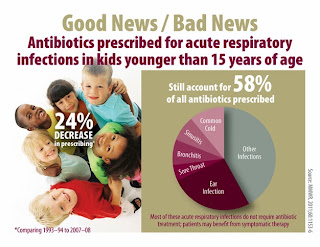
Knowing when antibiotics work — and when they don’t


http://www.cdc.gov/features/getsmart/largechart.html
From Centers for Disease Control and Prevention
It’s Get Smart About Antibiotics Week, an annual event promoted by the Centers for Disease Control and Prevention. The week teaches people how to use antibiotics the right way and draws attention to the growing problem of antibiotic resistance.

Antibiotics are crucial for treating and curing bacterial infections, and it’s very important to use them exactly as your doctor advises. This means that you should only take the prescribed dose and complete the full course of an antibiotic, even if you feel better before you run out of medication. Otherwise, you may get re-infected by bacteria that’s still inside you.

We tend to think that antibiotics work for every illness, when actually they don’t. Antibiotics only work against infections caused by bacteria. Antibiotics don’t work against infections caused by viruses. The flu and common colds are caused by viruses, so those sniffles and aches aren’t going to be cured by an antibiotic.

Using antibiotics when they aren’t needed can be harmful. If they aren’t used correctly, antibiotics can stop working. In fact, some diseases that were treatable with antibiotics have already become resistant to them, meaning they don’t work as well as they should, or worse, don’t work at all. Taking antibiotics when they are not needed or misusing them also increases the risk that an infection you get later will resist antibiotic treatment.

CDC has more tips for using antibiotics wisely:
  • Get smart about what kinds of upper respiratory infections are usually caused by viruses and can’t be cured with an antibiotic.
  • Take antibiotics only if they’re prescribed to you. Don’t share and or use leftover antibiotics.
  • Don’t save your antibiotics for the next time you get sick. Properly dispose of any leftover medication once your prescribed dose is complete.
  • Prevent infections by practicing good hygiene, such as frequent hand-washing, and getting recommended vaccines.
  • Don’t ask for antibiotics when your doctor doesn’t think you need them. Antibiotics have side effects, and taking them when they’re not essential may do you more harm than good.
Now that you know how to be smart about antibiotics, spread the word! Send a CDC e-card, add a logo to your website and read this helpful tip sheet from APHA.

Thursday, September 26, 2013

CDC superdog teaches kids how to be prepared for disasters

Ready Wrigley
Dogs have always been a human’s best friend, but who knew they could also help kids prepare for emergencies? The Centers for Disease Control and Prevention’s Office of Public Health Preparedness and Response would like you to meet Ready Wrigley, a caped cartoon superdog who helps children and families learn how to prepare for the unexpected.

Ready Wrigley is the star of two free activity books — perfect for families, friends and classrooms — that kids can enjoy as they learn how to keep safe. The books come with fun puzzles, games and tips that are written at a child’s level.

In her debut activity book, Ready Wrigley focuses on teaching kids about hurricanes, such as what a hurricane is and how to spot one. Along with helpful checklists to create a hurricane emergency kit, the book tells kids what to do in case of an evacuation.

This year, a second Ready Wrigley activity book debuted that focuses on earthquakes. The book, which was released just in time for National Preparedness Month in September, explains how earthquakes happen and what to do when one occurs. Directions teach kids how to “drop, cover and hold on,” and tell them what they can expect after an earthquake.

Involving kids in your family’s preparedness activities can be key to staying safe. And teaching kids about disasters and emergencies before they occur can help them be less afraid when something does occur.

Want even more preparedness info for kids? APHA’s Get Ready campaign features free preparedness games and materials for children. Visit our kids page to download them, and check out our parents page for information on talking to your kids about preparedness.

Thursday, August 22, 2013

August is National Immunization Awareness Month


The back-to-school rush is well underway. In fact, for some students, summer vacation is already over. With August observed as National Immunization Awareness Month, it’s a perfect time to think about vaccinations and remind family, friends and co-workers to catch up on their shots.

Immunizations save lives and protect communities. Thanks to vaccinations, many disease threats have been eliminated or greatly reduced in the United States.

Immunizations aren’t just for babies. In fact, they can help everyone protect themselves from serious diseases and illnesses. For example, young kids need shots to protect them against diseases such as polio and hepatitis, while older kids need immunizations for meningitis and HPV.

Access the Centers for Disease Control and Prevention’s immunization schedules to see which immunizations are right for you and your family.

For more information on immunizations, check out our Get Ready vaccination fact sheet. Also, download and share our vaccination fact sheets with information on kids, teens and adults.

Thursday, June 20, 2013

Staying cool during a heat wave

Heat waves can come on suddenly and without warning. Extreme heat can be a danger, especially for seniors and people with certain medical conditions. In fact, extreme heat caused more U.S. deaths in the past 30-plus years than hurricanes, floods, earthquakes and lightning combined, according to the Centers for Disease Control and Prevention.

Stay cool

Air conditioning is the best way to protect yourself from heat-related illness and death. When it’s really hot out, stay inside in locations with air conditioning. If you lack AC at home, check out shopping malls, libraries or heat-relief shelters in your area. Going to a local museum is also a good way to beat the heat.

Stay hydrated

Drink plenty of water, even if you aren’t thirsty. Avoid drinking liquids that contain alcohol or large amounts of sugar, as these can cause you to lose more body fluid and become dehydrated.

Who is at risk?

Anyone can get sick from hot weather. People at higher risk of heat-related illnesses include seniors, infants, young children and those who are overweight. People with chronic heart or lung problems or disabilities are also at greater risk.

Symptoms of heat-related illnesses

If you feel faint, dizzy or nauseous or have heavy sweating or exhaustion when it’s hot, ask a family member, friend or neighbor to sit with you until you feel better.  If you don’t feel better soon, call a doctor immediately or go to the nearest hospital. 

For more tips, download the Get Ready campaign’s heat waves fact sheet in English or Spanish.

Friday, April 19, 2013

H7N9 influenza: What you should know now

Dr. Michael Jhung,
medical officer for the influenza division,
Centers for Disease Control and Prevention
A new flu virus has recently emerged in China, putting health officials around the world, including those at the U.S. Centers for Disease Control and Prevention, on alert. Today’s guest blog post by Dr. Michael Jhung, medical officer for the influenza division, Centers for Disease Control and Prevention, provides a status report of flu activity as of April 18, 2013, and tells you what you need to know about this novel virus that to date has led to 87 confirmed illnesses and 17 deaths.

Not long after a newsworthy 2012-2013 influenza season, flu is in the headlines again. On April 1, the World Health Organization first reported three human infections with a new influenza A (H7N9) virus in China. Since then, additional cases have been reported. Most of the people reportedly infected have had severe respiratory illness and, in some cases, have died.

Fortunately, there are currently no reported cases of H7N9 in the U.S. or anywhere outside of China. At the Centers for Disease Control and Prevention, we are following this situation closely, coordinating with domestic and international partners, taking routine preparedness steps and sharing frequent updates.

Here are some things you should know about the current H7N9 situation:
  1. It is still early in the response and there is a tremendous amount that we don’t know. Our information is likely to be updated and change frequently as we learn more about H7N9. To stay informed, please visit our H7N9 page.
  2. There are no confirmed cases of human infection in the U.S., and there is currently no evidence that the virus can spread in a sustained way from person-to-person. Other than advice for travelers or people who are ill, CDC is not making any additional or special recommendations for U.S. public action specific to H7N9. Travelers should continue to visit CDC’s Travelers' Health page on H7N9 for CDC’s current travel recommendations.
  3. After the first human infections with H7N9 were detected in China, Chinese authorities detected H7N9 viruses in poultry in the same area where human infections have occurred. China is investigating cases, their exposures and their contacts closely. Many of the humans infected with H7N9 are reported to have had contact with poultry. The current working assumption is that most human infections with H7N9 have resulted from exposure to infected birds or contaminated environments. The extent of the outbreak in poultry is still being assessed, but China has reportedly begun removing birds from live markets. Shanghai is currently taking extra precautions by closing down its live poultry markets for the time being.
  4. On Thursday, April 11, CDC received the first H7N9 virus isolate from China. Since this H7N9 virus is new and has pandemic potential, we are using the virus isolate from China to develop a candidate vaccine virus that could be used to make a vaccine if one is needed.
  5. CDC also is using the virus isolate from China to:
    • Develop a test kit for detecting H7N9 infections in humans.
    • Test for the presence of antibodies against the H7N9 virus in human blood samples. This will allow CDC to see if some people already have immunity against this virus.
    • Test to see whether existing antiviral drugs —i.e., Tamiflu and Relenza — will work to treat people who become ill from H7N9.
  6. The investigation in China has not revealed any sustained — or ongoing — human-to-human spread of this virus, but non-sustained human-to-human spread of bird flu viruses has occurred in the past, most notably with H5N1. It’s likely that some limited human-to-human spread of H7N9 will occur. Sustained, community transmission is needed for a pandemic to start.
Visit cdc.gov for more information on human-to-human transmission. 


About the author:
Michael Jhung, MD, MPH, MS, is a medical officer for the Surveillance and Outbreak Response Team in the Influenza Division, National Center for Immunization and Respiratory Diseases, at the Centers for Disease Control and Prevention in Atlanta, Georgia. Dr. Jhung received his Bachelor of Science in Kinesiology from University of Michigan in 1989 and his Master of Science in Bioengineering from the University’s College of Engineering in 1994. He completed his doctorate of medicine from Case Western Reserve University School of Medicine in 2002, and his Master of Public Health in Epidemiology from University of Michigan’s School of Public Health in 2004.

Dr. Jhung began working with CDC’s Division for Healthcare Quality Promotion in 2005 as an Epidemic Intelligence Officer, where he conducted surveillance for healthcare-associated adverse events and rapidly responded to requests for assistance with investigation of health-care associated infections. Dr. Jhung graduated from the EIS program and joined Influenza Division’s Surveillance and Outbreak Response Team in 2009, where he has applied his expertise to responding to influenza outbreaks, providing scientific training of Fellows and staff, and contributing key findings to CDC’s pandemic preparedness plans.

Thursday, January 17, 2013

New podcast: Flu season update from CDC

A potrait of Dr. Michael Jhung from the CDC
Dr. Jhung, MD, MPH, MS,
Medical Officer for the CDC
Have you noticed that a lot of people are talking about the flu right now? It’s on the news, and as more people come down with the flu this year, it’s on everyone’s minds, too.

More than 40 U.S. states are reporting widespread flu activity in what has turned out to be an early start to the 2012-2013 flu season. The Get Ready campaign spoke with Michael Jhung, a medical officer for the U.S. Centers for Disease Control and Prevention, to get the scoop on this year’s flu season in the latest episode of our Get Ready Report podcast.

Jhung said that this year’s flu season is off to “quite an early start,” and that this year could turn out to be worse than last year’s flu season.

Why worry about the flu? Jhung reported that the flu kills anywhere between 3,000 and 49,000 people in the U.S. each year, and makes thousands more severely ill.

“Influenza puts several hundred thousand people into the hospital every year in the United States,” he said. “Even if you don’t end up in the hospital with influenza, it’s really a miserable experience to be pretty much incapacitated for the few days to week of influenza symptoms.”

If you’ve been lucky enough to avoid the flu so far this year, you can increase your chances of staying healthy by getting a flu shot. That’s right — it’s not too late!

“There is a lot of flu activity out there right now, and there is every reason to go out and get vaccinated if you haven’t been vaccinated already,” Jhung said.

If you are looking for the flu shot, check flushot.healthmap.org to find a location near you.

Jhung also explains during the podcast why some flu seasons are worse than others, and talked about how the CDC monitors flu every year. Plus, he has other useful tips for keeping yourself healthy after you’ve gotten your flu shot.

Check out the podcast for more helpful information about the flu. You can listen to the episode or read the full transcript. And don’t forget to subscribe to our podcast for free via iTunes!

Thursday, December 06, 2012

Earliest start to the flu season in nearly a decade — It’s not too late to vaccinate!

This week, officials at the U.S. Centers for Disease Control and Prevention announced that they are seeing increased flu activity around the country. Thomas Frieden, CDC director, said that this was “the earliest regular flu season in nearly a decade.” He also warned that “this could be a bad flu year.”

CDC made the announcement during a teleconference to kick off National Influenza Vaccination Week, which runs from Dec. 2-8. The observance was started in 2005 to remind people that it’s not too late to vaccinate if they haven’t gotten their flu shot before the holidays.

Frieden also had some good news: This year’s flu shot, which protects against different types of flu strains than last year’s shot, is almost a perfect match for the types of flu that doctors and hospitals are finding in the U.S. This means that people who have already had their flu shot this year will be well-protected.

The CDC recommends that almost everyone 6 months of age and older gets a flu shot every year. It’s especially important for people at high risk for complications from influenza — like pregnant women, young children, older adults and people with chronic diseases — to prevent getting the flu with a seasonal flu shot. (Find out more about high risk groups on CDC’s website.)

It takes about two weeks for the flu shot to fully take effect, so right now is a great time to get the flu vaccine. As Frieden reminded us this week, “When you get together with your friends and family, be sure you spread good cheer and give presents, and that you don't share infections and spread the flu.”

Here’s to healthy, happy holidays for all!

Friday, August 10, 2012

Summer Safe: Don’t let these three infectious diseases ruin your summer fun

Do your late summer plans include a trip to a state or county fair? How about a camping trip, or perhaps a visit to a local farm?

Reports of infectious diseases spread by animals and insects have been on the rise this summer. Here are three infectious diseases that have been in the news recently, along with tips for how you can protect yourself and your loved ones.

H3N2v, aka “swine flu,” from pigs
[Image courtesy
USDA/Scott Bauer]
In the last few weeks, the Centers for Disease Control and Prevention has reported new cases of a type of influenza, H3N2v, that comes from pigs. Most of the people who got sick with this new type of flu had direct contact with pigs on farms or at state and county fairs. If you work around pigs or if you will be attending a fair or farm show, follow these tips to protect yourself:
  • Always wash your hands after touching animals.
  • Don’t eat or drink if you’re in an animal enclosure, and keep your hands away from your face.
  • If you have a weak immune system or are at high-risk for flu, stay away from pigs. This includes young children and adolescents, pregnant women, people who are already sick and people ages 65 and older.
  • Stay away from any animal that looks sick or acts strange. Call a veterinarian if you suspect that an animal is sick.
For more information, check out CDC’s H3N2v page.

[Image courtesy
USDA/Keith Weller]
Salmonella from baby chickens
Live baby poultry such as ducklings and chickens are adorable — what kid can’t resist picking up one of these cute, fuzzy, chirping animals? Don’t let their cuteness fool you: These animals can pose a health risk, especially to young children. Baby poultry, found in petting zoos, fairs and even in classrooms or at home, have been known to spread salmonella.

This year alone, baby chickens have been linked to salmonella cases in states around the country. Here are some tips to prevent illness from salmonella:
  • Don’t let children younger than age 5 touch or handle chicks or ducklings.
  • Don’t bring chicks, ducklings or other live poultry into your house.
  • Make sure anyone who handles baby poultry washes their hands thoroughly with soap and water. Adults should help young children wash their hands. For information about hand-washing for any age group, check out our collection of Get Ready fact sheets!
CDC has more information on salmonella and baby birds on its website.

West Nile virus from mosquitoes
[Mosquito image courtesy
CDC/ Frank Collins, PhD.]
So far this year, 42 states and the District of Columbia have reported West Nile infections in people, birds or mosquitoes. People get West Nile virus when they are bitten by mosquitoes that carry the disease. You can’t tell if a mosquito is infected just by looking at it, so the best protection is to prevent mosquito bites.
  • When you go outdoors, use insect repellent — especially at dusk and dawn, when mosquitoes are most active.
  • Wear long sleeves and pants when possible.
  • Mosquitoes breed in still water, so remember to empty out barrels, flowerpots and buckets that are filled with water on your property or in your neighborhood. 
  • Learn more about protecting yourself from mosquitoes by checking out our fact sheet (PDF).
You can learn more about West Nile virus from CDC.

Even though these infectious diseases are on the rise, protecting yourself can be as simple as washing your hands and wearing bug spray. We hope this helps you stay safe this summer!

Friday, June 01, 2012

2011-2012 flu season is officially over

Welcome to our last Flu Friday post of the season!

This week, the Centers for Disease Control and Prevention announced that the 2011-2012 flu season has officially ended. The season is usually declared over when low numbers of people go to the doctor for flu-like illnesses.

In its final FluView report, CDC stated that the “late and mild flu season” has set the record for the lightest and slowest-starting flu season since it started tracking the flu in 1997.

Officials aren’t sure why the flu season was so mild this year, but they think it might have something to do with the warm winter, the fact that many of the flu viruses circulating this year were also around last year and the fact that more people in the U.S. have gotten their annual flu shot.

This doesn’t mean that we’re totally flu-free now. As CDC wrote in its FluView report, “The late start of this season and the fact that flu viruses circulate year-round in the United States means that some flu activity will likely continue to occur in the coming weeks.”

Yes, you can still get the flu in the summer! If you’re helping us track the flu with our FluNearYou tool, we’ll still send out the weekly “How Are You Feeling?” emails.

Be sure to stay healthy this summer by practicing good hand-washing. And don’t forget to check out our new Summer Safe series, where we’ll bring you tips to stay healthy so you can have fun all summer long!

Saturday, May 05, 2012

Learn how to save lives on World Hand Hygiene Day


Today is World Hand Hygiene Day, an event created by the World Health Organization to educate people about hand-washing to stop the spread of infectious diseases in health care settings.

The U.S. Centers for Disease Control and Prevention put out a short video to teach everyone about hand-washing in hospitals. We know that hand-washing is important for health providers like nurses and doctors, but it’s also important for hospital patients and visitors too!

Check out the video and learn how you can save lives in a hospital, just by washing your hands — and reminding your nurses, doctors and other health workers to do the same!


And don’t forget to check out our hand-washing fact sheets for more information!