Showing posts with label home safety. Show all posts

Friday, June 12, 2015

Get Ready podcast: Creating healthy, safe homes

We spend a lot of time at home. So it’s important to make sure that the places we live are safe. It starts with where our houses are built and how they are made. That’s why we need to know and understand local health threats before we build. If people know the risks common to their area, it’s easier to build to help guard against them.

Still, homes that have health problems are located all over the U.S. Many put people in contact with health threats like radon, lead and more.

In our new podcast, APHA’s Get Ready campaign spoke with Dr. Warren Friedman, senior advisor to the director at the U.S. Department of Housing and Urban Development’s Office of Lead Hazard Control and Healthy Homes, to learn more about making safe homes.
PHIL Image 19316
CDC // Theresa Roebuck
Dr. Friedman’s office targets the roots of these problems. Instead of just cleaning up, they figure out where and how the problem starts.

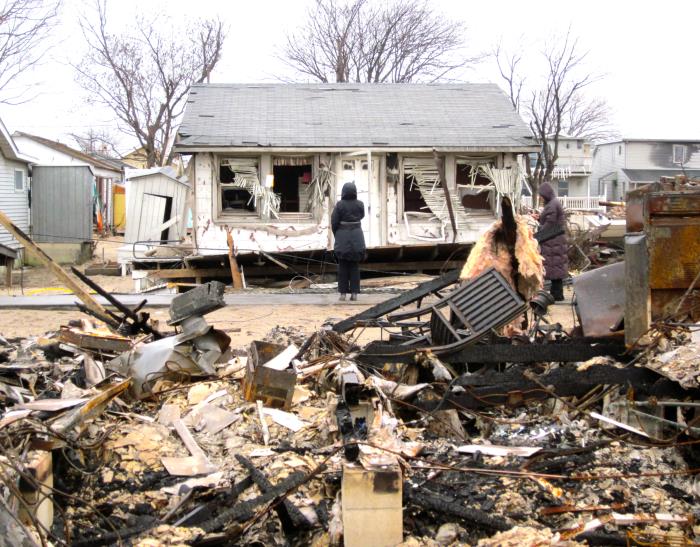
Even with good preparation though, emergencies happen. Dr. Freidman noted that we learn a lot of lessons after disasters such as Hurricanes Katrina and Sandy. He said as we rebuild affected communities we take those lessons to reduce the consequences of future disasters.  The Department of Housing and Urban Development is using what we’ve learned to come up with better ways to prepare and respond, and to help federal and local governments work together to keep us all safer.

To hear more about resilient communities, listen to our newest Get Ready Report.  And check out our new home safety infographic for more ways to make your home safe!

Thursday, May 16, 2013

‘Hey, where is everyone?’ Communicating with your family during disasters

Family making an emergency plan / FEMA
Have you ever planned an event with your friends or family? You decide where to meet and how to reach one another if someone is late or gets lost. You also pick someone to be in charge of transportation. Having plans in place ahead of time helps create a successful gathering.

Getting your family ready for an emergency is kind of like organizing a family activity. There are many similar things to think about: Do you have a plan if something goes wrong? Do you have supplies? Do you know where to meet or how to contact one another?

Chances are not all family members will be together when a disaster strikes, so it’s important to plan ahead. Talk to your family about what to do in advance of a disaster. This will help reduce fear and anxiety when things are tough.

Here are a few key tips for communicating with your family before and during disasters:
  1. Meet with your family about why you need to prepare for disasters.
  2. Talk about the types of disasters that are most likely to occur in your area.
  3. Pick three places to meet based on each situation.
  4. Develop a communications plan in case family members are separated from one another. Complete a contact card for each family member and place it in their wallet, purse, book bag or backpack.
  5. Communicate with text messages during a disaster, as cell phone service may be out. Text messages often go through when a phone call might not.
  6. Program your cell phone with your “ICE” contact, short for “in case of emergency.” Emergency workers will check for ICE contacts if something bad happens.  If you have put a lock on your phone, you might want to think about putting a sticker with your ICE contact on the back of your phone.

Everybody’s needs are different, but we can each take important steps to prepare our families for disasters. And communication is key.

For more information on preparing families for disasters, check out  American Red Cross’s Get a Kit. Make a Plan. Be Informed, the Centers for Disease Control and Prevention’s Develop a Family Disaster Plan and the Federal Emergency Management Agency’s Family Emergency Plan Template.

APHA’s Get Ready campaign also offers a fact sheet for parents in English and Spanish to help your family make a plan.

Friday, October 12, 2012

The biggest disaster threat in the US – and what YOU can do to prevent it!

What disaster poses the biggest threat in the U.S.?

You might be surprised to find out that it’s not earthquakes, tornadoes, hurricanes or other severe weather: fires are the most common home disaster in our country. In 2010, the American Red Cross responded to a home fire an average of once every 8 minutes.

That’s the bad news. The good news is that — unlike other disasters — most home fires can be prevented!

Oct. 7-13 is National Fire Prevention Week so we wanted to share some tips to help you get ready for fires at home:
  • Make sure you have a smoke detector installed on every floor, and change the batteries at least once a year. We recommend checking your smoke detectors and emergency stockpiles when you change your clocks on Nov. 4, 2012 – or as we like to call it, Set Your Clocks, Check Your Stocks day!
  • Make sure you think about what your family will do during a fire when you sit down to make emergency plans. FEMA recommends that you “Have Two Ways Out” of every room. And don’t forget to pick a place to meet up once everyone is out safely!
  • Check out our Home Disasters fact sheet [PDF] for more tips about preparing your home for disasters.
  • If you live in an area at risk for wildfires, you should make extra plans for your home and your family. Check out our recent blog post about wildfires, or download our fact sheet [PDF] for more info!
We hope this information helps you and your family prepare for a fire and stay safe.

Do you have any stories to share about home fires? Let us know in the comments or send us an email!