We can’t believe it’s August already, but we’re ready for National Immunization Awareness Month. You probably know something about vaccines, but we all need to make sure we’re up to date. So remind the people you care about with our new e-card, just in time for flu season.
To stay safe and to help keep our communities healthy, it’s important for all of us to be vaccinated. Check out this blog post about how you getting a vaccine can help keep everyone else healthy, too.
We’ve all got a part to play in the health of our communities. So roll up your sleeve and send out our new e-card to remind your friends of the importance of vaccinations!
While protecting ourselves from contagious disease is a lifelong practice, it starts when we’re young. That’s why people across the country are celebrating National Infant Immunization Week April 18-25.
The observance promotes immunizations for children ages 2 or younger. It also recognizes the important role of vaccines and the workers at state and local health departments and other health professionals who give vaccinations to help safeguard our communities from disease.
Their contributions are remarkable. In the United States, we protect children and infants under age 2 from 14 vaccine-preventable diseases through immunization, including chickenpox, mumps and polio. Vaccines have dramatically decreased infant death and disability caused by preventable diseases.
Vaccines not only help protect vaccinated individuals, but also help to protect entire communities. A study from the Centers for Disease Control and Prevention reports that among children born during 1994-2013, vaccination will prevent an estimated 322 million illnesses, 21 million hospitalizations and 732,000 deaths during their lifetimes.
Vaccines are safe and effective, and have saved countless lives. They are one of the greatest public health accomplishments. But we need to make sure we have an adequate supply to reach everyone. And, most important, you have to get immunized for them to work.
This week, officials at the U.S. Centers for Disease Control and Prevention announced that they are seeing increased flu activity around the country. Thomas Frieden, CDC director, said that this was “the earliest regular flu season in nearly a decade.” He also warned that “this could be a bad flu year.”
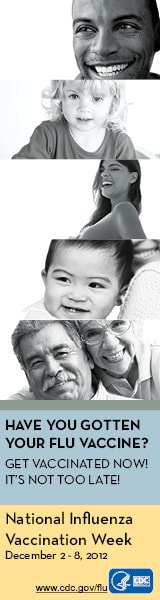
CDC made the announcement during a teleconference to kick off National Influenza Vaccination Week, which runs from Dec. 2-8. The observance was started in 2005 to remind people that it’s not too late to vaccinate if they haven’t gotten their flu shot before the holidays.
Frieden also had some good news: This year’s flu shot, which protects against different types of flu strains than last year’s shot, is almost a perfect match for the types of flu that doctors and hospitals are finding in the U.S. This means that people who have already had their flu shot this year will be well-protected.
The CDC recommends that almost everyone 6 months of age and older gets a flu shot every year. It’s especially important for people at high risk for complications from influenza — like pregnant women, young children, older adults and people with chronic diseases — to prevent getting the flu with a seasonal flu shot. (Find out more about high risk groups on CDC’s website.)
It takes about two weeks for the flu shot to fully take effect, so right now is a great time to get the flu vaccine. As Frieden reminded us this week, “When you get together with your friends and family, be sure you spread good cheer and give presents, and that you don't share infections and spread the flu.”
For the first time, some of America’s northern neighbors scored themselves on the flu — and they didn’t make the grade.
Image: Flu Report Card, courtesy The Lung Association
The British Columbia and Quebec Lung Associations created a Flu Report Card to see how well prepared their provinces were compared to the rest of the country.
Released this week, the report card showed the percentage of adults that received a seasonal flu vaccination during the 2011-2012 flu season. They compared the rate to the percentage of people who reported getting the flu this year. Not surprisingly, provinces where more adults got flu shots reported lower rates of the flu.
Canada’s two most populated provinces, Ontario and Quebec, received the worst grades: D- and F, respectively. Quebec failed because its vaccination rate was the lowest — only 27 percent of adults got the flu shot this year, so one in four people living there got the flu. This is especially bad news considering the weak flu season we’ve had in North America this year.
“Clearly, Quebeckers are not ready for a severe flu season," said Dominique Massie, executive director of the Quebec Lung Association, in a news story.
The report found some good news: 52 percent of British Columbians received the flu vaccine this year, and they reported the lowest rates of the flu, at 10 percent. And overall, more Canadians are getting the flu shot every year. The researchers also found that more people said they would get the flu shot if it was delivered with a smaller needle.
What does this mean for the U.S.? Well, the biggest lesson is that if more people get the flu shot, fewer people get the flu.
We here at Get Ready think it would be really cool to have a Flu Report Card in the U.S. What do you think? If your state was failing at the flu — or passing with flying colors — would that change your flu shot behavior? Let us know in the comments!
In general, vaccines are one of the best tools in medicine: The World Health Organization reports that 2 million to 3 million lives are saved every year thanks to vaccines.
Vaccines also have lower rates of complication than most medications. In fact, the Centers for Disease Control and Prevention estimates that there is about a one in 1 million chance that someone will have a severe reaction to common vaccines like MMR (aka, measles, mumps, rubella) or hepatitis B.
What about flu vaccine safety? CDC recently released a video about the safety of the influenza vaccine that answers a lot of common questions, such as safety of the flu shot for young children, pregnant women and people with egg allergies.
(Spoiler alert: Yes, the flu shot is safe for almost everyone!)
In our previous Flu Friday post, we talked about the process of deciding what types of flu will be covered by the seasonal flu shot. Today, we’ll take a closer look at how the shot is made each year. But first, here’s a little background on how vaccines protect you from diseases.
Vaccines work by tricking your body into thinking it has an infection. This is because vaccines contain dead or weakened forms of the bacteria or virus that they are trying to protect you from. Even though these bacteria or viruses are too weak to make you sick, when your body notices these invaders, the immune system kicks in. Your body builds up defenses against the invaders so that when you come in contact with a full-strength virus such as the flu, your body already knows how to fight it off.
There are two ways to get your flu vaccination: Via a shot or a nasal spray. Flu shots have inactive — or dead — viruses, while the nasal spray form of the vaccine contains weakened viruses. Whether you get your vaccine in a shot or a nasal spray, the vaccine helps your body prepare to fight the most common strains of flu each season.
But back to the making of the flu vaccine: As we discussed previously, seasonal flu vaccines contain three strains of viruses. After the strains of flu are chosen, scientists then have to grow enough of the viruses to make millions of doses of the flu vaccine that are used every year. This process can take up to six months or more because the viruses are grown in a very delicate place: The inside of a chicken egg!
[Flu researcher inserting virus into a chicken egg.
Image courtesy CDC/Taronna Maines]
In the lab, viruses are injected into each egg, and then the eggs sit at a perfect temperature for the virus to spread. After a few days, the viruses are removed from the egg and killed. Proteins from the dead virus are separated out. It’s these proteins that go into your flu shot. (Even if you have an egg allergy, the flu vaccine is probably safe for you — here’s why: http://getreadyforflu.blogspot.com/2012/01/get-ready-mailbag-can-people-with-egg.html)
Labs around the world start working on the vaccines during the summer months so that the seasonal flu vaccine is ready to go by the start of the flu season in the fall or winter. After you get your flu shot, it takes a few weeks for your body’s immune system to protect you from the flu, which is why it’s best to get your seasonal flu vaccine as soon as it becomes available!
Last week, the Centers for Disease Control and Prevention announced that the U.S. flu season has officially begun, making this the latest start to a flu season in 29 years.
While flu activity has been relatively low compared to other flu seasons, CDC did report some sad news: There have been three child deaths so far this year from influenza. In the U.S., an estimated 20,000 children younger than age 5 are hospitalized every year from complications with the flu, which is why CDC considers young children a high-risk group.
Thankfully, there are things that any parent can do to help protect their child from the flu.
Parents with children 6 months of age and older can take their child to get a flu shot. CDC recommends that all children 6 months of age and older be vaccinated against the flu. This is especially true for children with asthma or other chronic health problems, because they are at higher risk for complications if they get the flu.
Parents and siblings of babies younger than 6 months should get the flu shot themselves. Although a baby may be too young for the flu shot, family members can get vaccinated to reduce the chance of contracting the flu and passing it on to the baby. And parents should make sure that anyone who takes care of their baby — family members, baby sitters, nannies — are up-to-date on all vaccines, including seasonal influenza. For more information about children and the flu, check out CDC’s website. You can also read our Get Ready fact sheet that tells why it’s important for kids to get vaccines.
Pregnant women are also considered a high-risk group for the flu, because the flu can cause more severe complications during pregnancy, putting both the woman and developing fetus at risk. The great news is that the flu shot is safe for pregnant women, and the shot will also protect her fetus as well! Because of the safety and benefits of vaccination for pregnant women, the popularity of the flu vaccine has been growing in recent years. At least half of pregnant women in the U.S. reported getting their seasonal flu shot last year.
Aside from vaccination, parents of young children can teach good hand-washing techniques and other hygiene habits, such as covering their mouth and nose when they sneeze. The Get Ready campaign has a great selection of fact sheets about hand-washing for children of all ages to help parents and teachers.
Before you develop symptoms, you can get ready for cold and flu season by stocking up on basic supplies. We’ve put together a checklist of useful things to have in your home in case of a flu emergency (PDF).
If you do get sick, the most important thing you can do is stay home. The flu virus is highly contagious, and no one will admire you for coming into work or dragging yourself to school while you’re coughing and sneezing all over the place. If a loved one is sick, you should encourage them to stay in bed and rest until 24 hours after their fever is gone — that’s when the virus can no longer be spread.
While at home, you can do a number of things to make yourself (or the person you’re taking care of) feel more comfortable. Encourage the sick person to get plenty of rest, and have her or him drink clear fluids — water, broth or sports drinks will help prevent dehydration. Over-the-counter medications can help relieve symptoms like body aches, fever and coughing, but these will not make the person less contagious. Flu.gov has great information about treating the symptoms of the flu.
To prevent the spread of the flu when someone is sick at home, it’s best to have the sick person rest in an area separate from others in the family. Family members should wash their hands frequently with soap and water, especially after being around the sick person. (The person with the flu should wash their hands frequently as well!) People who are high risk for catching the flu, such as young children, pregnant women and the elderly, should avoid contact with the person who is sick. The Centers for Disease Control and Prevention offers more information about caring for someone sick at home on its website.
The exception to the “stay home” rule is if you or your loved one needs to visit a health provider. And that brings us to our next point: Know when to seek medical attention. Flu symptoms can be severe, but if you or someone you’re taking care of develops any of the following symptoms, they need immediate medical attention. Be alert for:
difficulty breathing,
blue or purple discoloration in the lips,
sudden confusion or change in behavior,
sudden dizziness,
pain or pressure in the chest,
severe vomiting, or
seizures.
We hope the flu doesn’t come near you this season, but in case it does, you’ll be ready!
If you’ve read or watched the news lately, you may have heard about an increase in pertussis, or “whooping cough,” infections. Several states are now reporting new cases, including West Virginia, Pennsylvania, New York, Rhode Island and Maine.
Pertussis is caused by bacteria called Bordetella pertussis. It causes respiratory illness that starts out like the common cold, with symptoms like a runny nose and low fever. After a week or two of illness, people infected often develop exhausting fits of coughing, which sometimes end with a “whooping” sound — hence the nickname, “whooping cough.” (Here’s what a young girl with whooping cough sounds like.) The coughing is so violent that it can cause people to vomit, pass out or even fracture their ribs. In other words, it’s a serious illness. Read more about pertussis on the National Foundation for Infectious Disease’s website.
Without treatment, pertussis can last for 6-10 weeks. While 10 weeks of violent coughing may sound terrible for anyone, babies are at especially high risk. More than half of infants that contract pertussis are hospitalized each year with life-threatening complications. In the U.S., 25 of the 27 deaths from pertussis in 2010 were babies who were less than a year old.
That’s the bad news. The good news about pertussis is this: There’s a vaccine for that! (Actually, there are two: One for babies and one for older children and adults.)
The Centers for Disease Control and Prevention recommends that babies get a series of shots called DTaP at 2, 4 and 6 months of age, and then two booster shots.
Older children and adults also need to be immunized regularly — even people who were immunized as a baby aren’t protected for life. The shot for teens and adults is called Tdap, and it’s recommended that most people get a booster shot about every 10 years.
This is especially true for pregnant women, new parents and anyone who spends time around newborn babies, because parents, older children and other caregivers can spread the disease to a new baby in their family without knowing it. You can listen to one mother’s story in this video from Parents of Kids with Infectious Diseases, an organization that provides educational information.
You can read more about pertussis vaccinations on CDC’s website. If you think it’s been a while since you’ve had a Tdap shot, the best thing to do is to contact your health care provider.
To end this post on a happy note, here is some good news from California: The state had a large outbreak of pertussis in 2010, which we wrote about on the Get Ready Blog. Hoping to control the outbreak, state health officials launched a big effort to educate and vaccinate people of all ages — and their hard work paid off! The California Department of Public Health announced last week that the number of pertussis cases dropped by more than two-thirds last year (dropping from 9,154 cases in 2010 to 2,795 cases in 2011). And even better, there were no reported deaths from pertussis in 2011.
So there you have it: The vaccine is your best defense against pertussis. Make sure your immunizations are up to date today so that you can be ready if whooping cough comes your way tomorrow!

 We can’t believe it’s August already, but we’re ready for National Immunization Awareness Month. You probably know something about vaccines, but we all need to make sure we’re up to date. So remind the people you care about with our new e-card, just in time for flu season.


.jpg)