Showing posts with label severe weather. Show all posts

Wednesday, June 03, 2015

Getting Ready for Floods

We’ve all seen the tragic news about the flooding in Texas and on the Plains. More than 20 people have lost their lives in the state and in Oklahoma since last weekend with others missing and many homes and businesses across the area destroyed.

Floods can happen anywhere and at times we don’t expect. We all need to know how to prepare. With a little effort, we can all be ready for floods.
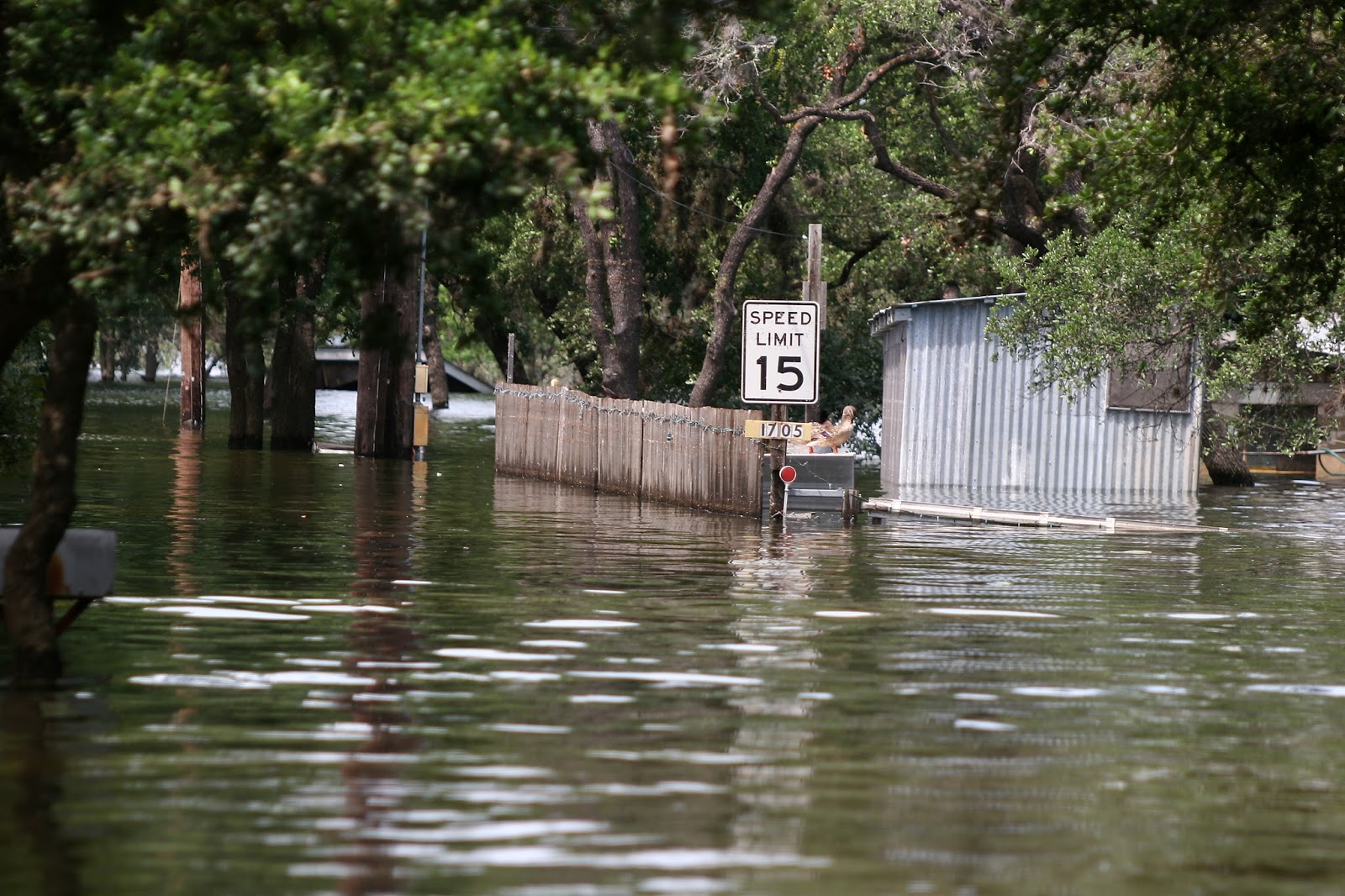
Photo: Bob McMillan // FEMA Photo

Getting ready starts before the first drop of rain. Floods can happen even if they haven’t hit your area before, according to Ready.gov. Check with your city or town to see if there is a plan in place in case of floods.

When there is a risk of a flood, it’s always important to listen to authorities. Make sure to have a battery-powered radio to listen for updates in case you lose power. Local leaders will keep you posted with the news. They’ll also let you know if you need to head to higher ground or if you should stay put.

Floods can contaminate your tap water. The Centers for Disease Control and Prevention warns that flood waters can carry dangerous chemicals and bacteria, so make sure you have plenty of clean, safe bottled water. The Federal Emergency Management Agency recommends having at least a three-day supply of food and water for your entire house.

Have an emergency stockpile for home stored somewhere it will be safe if waters rise. Keep a bag full of supplies such as flashlights, extra batteries, a first-aid kit, medications and non-perishable food, in case you have to leave quickly. If you have canned food, make sure to include a manual can opener.
Photo: Bob McMillan // FEMA Photo

After the flood, make sure your house is safe before going back in. Watch out for mosquitoes that live near standing water. Talk to your family or a friend if you feel stressed or anxious.

Floods are scary, but with the right preparation we can all stay safe. For more ways to prepare, check out our floods fact sheet on the Get Ready campaign website.

Thursday, June 13, 2013

Be on alert for summer storms

If you live on the East Coast, you may have been caught up in some severe thunderstorms this week. In fact, much of the country has been experiencing storms lately.

Thunderstorms can happen at any time, but are particularly frequent in the summer. Severe storms can bring heavy rain, high winds, hail, lightning and flooding.

Ready.gov advises that you be prepared for storms and stay safe by following these tips:
  • Begin preparing ahead of time by putting together an emergency kit and making a family communications plan.
  • Secure outdoor objects that can be blown away or can cause any injury or damage.
  • Shut all windows and secure outside doors.
  • Limit outdoor activities.
  • Unplug electronic equipment before the storm.

During the storm, following these tips can help you keep safe:
  • Listen to local news or the radio for emergency updates. Watch for signs of a storm, such as darkening skies, lightning flashes or increasing winds.
  • Keep away from electrical equipment, wiring and water pipes.
  • Stay away from water sources.
  • Stay indoors, says the American Red Cross. If outside, seek protection and get low — don’t be the tallest object in the area! Also, stay away from trees.

There’s also a good chance that the power will go out during a severe storm. To be prepared for a power outage, download and print our fact sheet now and save it with your emergency supplies.

Friday, April 05, 2013

Pledge to be a force of nature

Are you a force of nature? The Federal Emergency Management Agency and the National Oceanic and Atmospheric Administration want to help you become one. That’s why they created National Severe Weather Preparedness Week. Held annually each spring, the week encourages people to help their family, friends and community prepare for severe weather.
While the week is over, the lessons it shares are good year-round. The campaign aims to get people to understand what to do before, during and after severe weather. There are three simple steps that anyone can do to get ready for weather events such as tornadoes, hurricanes and other dangerous storms:
  1. Know your risk. Figure out which kinds of severe weather can happen where you live and work, so you can make a plan to get ready for these events.
  2. Take the pledge. Be a force of nature by taking the Pledge to Prepare at Ready.gov.
  3. Be an example. Once you take the pledge and start preparing, share your story with your family and friends. Tweet about it, write a Facebook post, make a YouTube video. By showing people that preparedness is something that anyone can do, you’ll inspire others to get ready, too!
We want to know how you plan to be a force of nature, so tell us what you do to prepare for severe weather in the comments below!
 

Friday, March 22, 2013

Flood safety awareness: What to do to get ready

Photo by Liz Roll/FEMA
True or false? Floods only happen during hurricanes and in places close to sea level.
Answer: False. The truth is that floods can occur in unexpected places. According to the National Weather Service, flooding can occur in any state at any time of the year. That means you should be prepared for a flood emergency even if you don’t live close to the water.
Floods are serious business: They cause an average of $5 billion in damage annually and about 100 deaths. The majority of those deaths occur while driving, particularly during flash floods. Flash floods can be the most dangerous because they happen with little warning.
This is National Flood Safety Awareness Week, sponsored by the National Weather Service. The week is a great opportunity to make sure you and your family are ready for a flood emergency.
Here are some things you should keep in mind:
  • Do not try to cross flooded areas — the water may be deeper and moving more swiftly than it appears. If your car gets stuck in a flood, do not open the car door. Try to climb out through car windows, if possible.
  • Keep up to date on tetanus shots in case you are hurt during a flood. Adults need a tetanus booster shot every 10 years.
  • Store nonperishable food in waterproof containers in a high place. Stock one gallon of bottled water per day per person in your household, and plan on at least three days of supplies.
  • During post-flood cleanup, wear gloves and regularly wash hands in clean water — boiled, if from the tap — and soap.
Check out our Get Ready flood fact sheet so you’ll know what to do before, during and after a flood happens. Come high water, you’ll be ready!

Friday, December 21, 2012

Get Winter Ready with us this year!

Today is the first day of winter, so what better time to start thinking about what you need to do to prepare for winter weather?

We’ve put together a Winter Ready page so that you can see all of our great resources on winter storms, power outages, cold and flu season and more — all in one place.

We’ll also be focusing on winter weather preparedness over the next few months, so check back for our Winter Ready blog posts. You can subscribe to the Get Ready Blog so you don’t miss a thing.

Stay warm, stay safe — and happy winter!

Tuesday, September 18, 2012

My Get Ready Story: Knowing the importance of preparing for hurricanes

As a part of National Preparedness Month, APHA’s Get Ready campaign asked people to share their preparedness stories with us. Our first story is from Carol L., of Satellite Beach, Fla. Carol tells us how her family gets ready for hurricanes:

Image: Hurricane Andrew making landfall
on the Florida coast,
August 24, 1992 - Courtesy
NOAA's National Weather Service (NWS) Collection

“Every year on the Atlantic Coast of Florida, residents prepare ahead for the hurricane season. A few years ago, a hurricane did major damage that knocked out power for a week.

Luckily, we had volunteers who helped us through the days. Different banks and insurance companies delivered bags of ice to those who needed it. EMTs and National Guard members checked to make sure everyone was healthy. Those who had battery-operated saws volunteered to clear the roads. Residents pitched in to help their neighbors.

Now, we have a list that we post in our laundry room of all the supplies we need to purchase before the season starts. All emergency gadgets are tested to make sure they are in working condition. We have purchased a butane stove. We do not purchase a large amount of food for the freezer. Instead, we leave room to store ice that will keep things cool for a while. We have a good supply of our prescriptions. We also have a plan for evacuation in case we are told to leave the barrier island. Our cars' gas tanks are kept full. The county has assigned buildings that we can use for a few days. Some of the buildings accept pets; others are for those medically impaired. We are ready but we are very happy when the storm passes out to sea.”

How do you get ready for emergencies? Share your story in the comments or send us an email!

Friday, August 31, 2012

Tips to help you before, during and after a hurricane

Seven years ago this week, Hurricane Katrina made landfall in New Orleans, killing almost 1,800 people and causing billions of dollars in damage. This week, Hurricane Isaac — now downgraded to a tropical storm — hit Louisiana and other Gulf states, causing flooding and widespread power outages.

Hurricane Irene from space. Image courtesy
NASA/NOAA GOES Project

The storms serve as a reminder of the importance of getting ready for a hurricane and staying safe during and after the storm. Hurricane season runs through November, so there may be more U.S. storms still to come this year. Use our tips to get ready:

How to prepare for a hurricane
  1. Build an emergency kit. Start early so that you can avoid the crowds and make sure you have everything you need. The Get Ready campaign can help you put together an emergency kit.
  2. Have an emergency stockpile of food and water. The Federal Emergency Management Agency recommends that you have at least three days of supplies ready in case of an emergency. Have at least one gallon of water for each member of your family for each day.
  3. Make a plan. Do you live in an area at risk for flooding? Where are your local evacuation routes? Where will you meet up with your family if you are separated during the storm?Make a plan and be prepared.
What to do during a hurricane
  1. Listen to the weather forecast. (A battery-operated weather radio will help you stay informed if the power goes out!) If you are told to evacuate, do so as soon as possible.
  2. If you are not told to evacuate or are unable to do so, stay inside. Stay away from windows and glass doors, and if possible stay in an inside room that is on the lowest level of your house.
  3. If phone lines are busy during the storm, check in with friends and family via text messages or social networks.
Stay safe after the storm passes
  1. If you were evacuated from your home, don’t go back until officials tell you that it is safe to do so.
  2. Do not walk, swim or try to drive in floodwaters. As little as six inches of moving water can knock an adult down or cause your car to stall. Check out our fact sheet about driving and disasters for more information about staying safe.
  3. If you are walking around outside, watch out for downed power lines.
  4. Manage power outages safely. Do not run power generators inside — they produce a clear, odorless gas called carbon monoxide that can be deadly. Do not light matches or use candles in your home in case there is a gas leak. And make sure your food is safe by following these tips.
  5. Remember take photos of the damage to your home and property.
  6. Protect yourself when cleaning up after the storm, especially if your home has been flooded. Be sure to wear gloves, wash your hands often and look out for any mold that may grow after the flood. Get more tips about cleaning up after a hurricane with our flood fact sheet.

We hope everyone is staying safe during Hurricane Isaac. Did your area get hit this time? Please share your experience with us in the comments below.

Thursday, July 19, 2012

USDA declares biggest natural disaster in history

Did you know we’re in the middle of the largest natural disaster in U.S. history?

This week, the U.S. Department of Agriculture declared that more than 1,000 U.S. counties are federal disaster areas. That’s more than 50 percent of U.S. territory.

The cause? A major drought that’s affecting at least 26 states. Droughts occur when an extended period of dry weather causes water shortages and sometimes damages crops.


The American Red Cross has a list of steps you can take to prepare for a drought.

During a drought, local officials may announce restrictions on water usage, such as not watering your lawn or washing your car. Check with your local government or water company to find the latest information.  

Is your area affected by the drought? Do you have any advice for coping with water restrictions? Share your stories in the comments below!

Friday, June 29, 2012

Summer Safe: It’s Lightning Safety Awareness Week

Lightning can happen at any time of year, but did you know that summer is the peak season for deadly lightning strikes? That’s why the National Oceanic and Atmospheric Administration has declared June 24-30 Lightning Safety Awareness Week.

According to NOAA, dozens of people die and hundreds are injured every year when they are hit by lightning. But these incidents are largely preventable with just a few tips:

  1. When thunder roars, go indoors! If you can hear thunder from a storm, it means you are also in striking distance of lightning; you should go indoors immediately.
  2. Get somewhere safe. A safe shelter is a building with at roof and sides, such as a house, school, shopping mall, grocery store or office building. A hard-topped vehicle is also safe, but you’re not protected in motorcycles, open vehicles such as Jeeps or golf carts. 
  3. If someone around you is stuck by lightning: Call 911 immediately. Lightning victims will not electrocute you, so they are safe to touch. Be prepared to start CPR or use an automated external defibrillator if the person does not have a pulse.
Pretty simple, right? Preparedness doesn’t get much easier!

For more information about lightning safety, check out NOAA’s new YouTube video.

Wednesday, June 13, 2012

New tools to help you get ready for disasters – socially

Just in time for hurricane season and summer’s severe weather, we’re highlighting some new electronic tools that will help you get ready for disasters.

First, the Department of Health and Human Services’ Office of the Assistant Secretary for Preparedness and Response recently announced two free Facebook apps that help people prepare for emergencies with their social networks. The bReddi Facebook app and Project: Lifeline are designed to help you identify “lifelines” in your community who you can count on during a disaster.

“We know that people who have friends or relatives they can rely on for help are healthier and live longer than those who don’t, and that every disaster has the potential to impact health, so having people you can depend on for help is especially important during a disaster,” said Nicole Lurie, assistant secretary for preparedness and response, in an HHS news release. “That’s why we are encouraging everyone to identify their lifelines in advance.”

Project: Lifeline allows you to select people from your social network that you can count on during an emergency. bReddi will help you identify severe weather risks in your area and create a preparedness plan. The app can even alert you via Twitter, text or Facebook message when the threat level changes! These Facebook apps may be especially useful after a disaster, when phone lines are often busy.


Screen capture from the new bReddi Facebook App showing a U.S. Map with local severe weather warnings.


What if you don’t use Facebook, or if you’re on the go? A national Wireless Emergency Alerts initiative was also announced last month. The new service will send a message to your cellphone if there is an emergency or disaster near you. The messages, which will look like text messages, are free, and you won’t have to sign up to receive them — everyone with text message service will receive them.  The text service will be location-based, so if you live in Chicago but are driving through Kansas during severe weather, you will get a tornado alert for your current location.

The new alert system is based on a partnership between the Federal Emergency Management Agency, the Federal Communications Commission and all major cellphone providers in the U.S.

Are you excited to try these new tools? Let us know in the comments if you’ve tried one of them, or if you want to recommend another app that helps you be prepared!

Friday, June 08, 2012

Summer Safe: Tips for staying healthy in hot weather

With record-setting warm weather across the U.S. this year, we wanted to kick off our Summer Safe series with some timely information about beating the summer heat.

To get the scoop about hot weather safety, we sat down with Linda Degutis, DrPH, MSN. Degutis is the director of the National Center for Injury Prevention and Control at the Centers for Disease Control and Prevention, and she had a lot of advice about heat-related illnesses.

Though many people want to have ‘fun in the sun’ during the summer months, really hot weather can pose a dangerous threat to people’s health. As Degutis explained, “extreme heat can lead people to have very high body temperatures,” which could quickly lead to brain damage, organ failure or even death.

Degutis, a past president of APHA, warned about the two heat-related illnesses people should avoid in hot weather: heat stroke and heat exhaustion. Heat stroke is more serious, because your body can lose its ability to cool itself down and your body temperature can get dangerously high.

These are the symptoms you should look out for (click to view larger):


The people who are most at risk for heat-related illness are the elderly, young children and people with chronic medical conditions. Also, people who spend a lot of time out-of-doors, such as construction workers and landscapers, the homeless and those who exercise in the heat are at risk for the dangerous side effects of spending too much time in hot weather.

That’s the bad news. “The good thing about all of this is that we can prevent heat-related illnesses by taking some relatively simple precautions,” Degutis explained.
These include:

  • During very hot weather, stay inside where it’s cool. If you don’t have air-conditioning in your house, go somewhere that does: A library, a grocery store, an indoor mall. Communities may also set up cooling centers where people can escape the heat, so check with your local government. 
  • Stay hydrated by drinking plenty of water. Alcoholic beverages and sugary drinks like soda and juice can make you more thirsty, so stay away from those as much as possible in the heat.
  • You can still stay active and enjoy the outdoors, but consider saving your exercise or outdoor activities for the cooler parts of the day: morning and evening. Avoid being outside in the middle of the day when it’s hottest.
  • Wear lightweight, light-colored clothing, because dark clothes or heavy fabric can trap heat. Also, make sure you wear a hat and sunscreen — sunburns put you at higher risk for heat-related illnesses!
  • Sign up for free weather alerts via email or text, so that you’ll know if there is an excessive heat warning for your area.
  • Don’t forget to check on friends, older family members and elderly neighbors in very hot weather.

For more information about staying safe in hot weather, you can listen to the podcast of our interview with Degutis. We also have a full transcript of the interview, and we created a handy Healthy You tipsheet about staying safe in the heat that you can print and share.

Thursday, May 31, 2012

Get ready for hurricane season: It’s National Hurricane Preparedness Week!

For people living on the Atlantic side of the U.S., hurricane season starts this Friday, June 1. To help prepare, the Federal Emergency Management Agency and National Oceanic and Atmospheric Administration have teamed up to bring you National Hurricane Preparedness Week, which runs May 27-June 2.

Each day of National Hurricane Preparedness Week has its own theme, including hurricane basics, dangers like winds and flooding, storm preparation and after-storm cleanup. Check out the poster below for the schedule, and click through for more information.

Poster for National Hurricane Preparedness Week listing the dates & themes for the week of observation.


NOAA has predicted that we may see one to three major hurricanes this season. Already this month, two tropical storms — Alberto and Beryl  — have popped up, causing high winds, rains and power outages. That’s why it’s important to prepare now.

Are you ready for a hurricane? Check our fact sheets in English and Spanish (PDFs).

Tuesday, April 24, 2012

Be “a force of nature” and help others learn about severe weather preparedness

April 22-28 is the first Severe Weather Preparedness Week in the U.S. The Federal Emergency Management Agency and National Oceanic and Atmospheric Administration are calling on you to “Be a Force of Nature” and spread the word about preparedness in your community.

How can you be a force of nature? There are three simple steps:

  1. Know the severe weather risks in your area.
  2. Make a plan to be prepared. Visit http://www.ready.gov/ to take the Preparedness Pledge and make your plan.
  3. Tell others what you’re doing to get ready.

Don’t forget to check out our Get Ready fact sheets, which can help you get ready for all kinds of severe weather and are available in both English and Spanish. You can also watch this short video from FEMA and NOAA for more information:


Leave a comment on our blog and tell us what you’re doing to become a force of nature for severe weather preparedness in your community!